G-Rex® for TCR-T Cell Therapy
G-Rex® has been used by academic and industry leaders across the evolving TCR-T development lifecycle—from neoantigen-specific TCR discovery and process development to clinical-scale TCR-T manufacturing. G-Rex®'s simplicity differentiates it from other technologies and confers fundamental advantages to those who choose G-Rex® in the form of flexibility, scalability, and platform continuity.
The Value of Simplicity
TCR-T cell therapy is inherently complex. Developers must identify and validate the right TCR, match it to the appropriate tumor antigen and HLA context, engineer it into T cells, and then manufacture sufficient numbers of functional cells for treatment.
G-Rex® offers fundamental simplicity and a reprieve from the constant complexity TCR-T cell therapy developers face every day.
G-Rex® devices support high-density culture which consolidates the large doses TCR-T cell therapies require into a minimal number of vessels, dramatically reducing contamination risk, operator burden, space requirements, and reagent consumption.
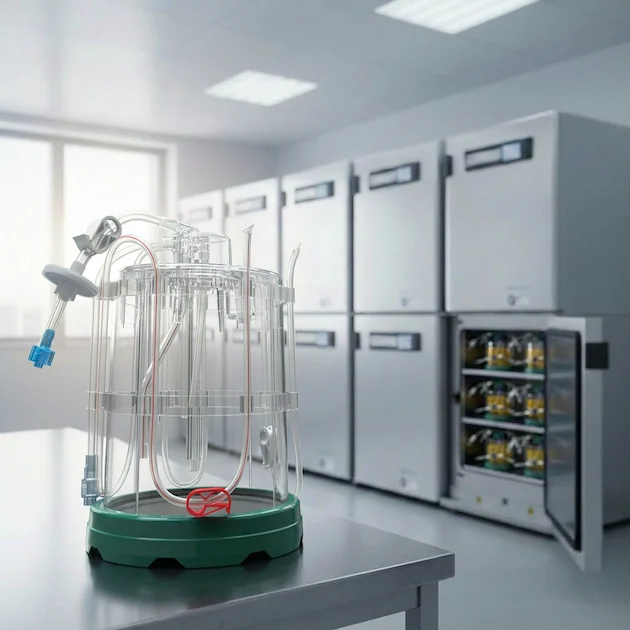
Closed system G-Rex® bioreactors are currently used to produce clinical grade TCR-T cell drug product in leading academic hospitals and pre-BLA corporations.
The same G-Rex® platform is well documented to support TCR discovery, process developent, and clinical manufacturing - reducing the friction of translating therapies form the benchtop to the bedside.
The Gold Standard
From some of the earliest clinical-scale TCR-T manufacturing work at the NCI Surgery Branch, G-Rex® has evolved alongside TCR-T cell therapy.
As leaders from the Surgery Branch carried their work to Rutgers Cancer Institute, Memorial Sloan Kettering Cancer Center, Providence Cancer Institute, and other leading academic centers, G-Rex® continued to support the development of increasingly sophisticated TCR-T therapies.
That same adoption extends to industry, where leaders such as Immatics have incorporated G-Rex® into the development and clinical manufacturing of their TCR-T programs.
Across academia and industry, G-Rex® has supported TCR discovery, process development, scale-up, and clinical manufacturing—establishing G-Rex® as the gold standard platform for developing and manufacturing TCR-T cell therapies.
Academics



Pre-BLA

A Typical Process
TCR-T workflows vary considerably, but most follow a familiar path from TCR discovery and validation through T cell collection, activation, engineering, expansion, harvest, formulation, and ultimately infusion. G-Rex® can support that journey from early TCR discovery and process development through clinical-scale manufacturing.
Recommended Products
From TCR discovery and process development through clinical manufacturing, the G-Rex® platform provides a simple and scalable foundation across the TCR-T development lifecycle. Use G-Rex® well plates as a TCR Discovery Engine, then transition to G-Rex® bioreactors as the cGMP standard for clinical manufacturing.
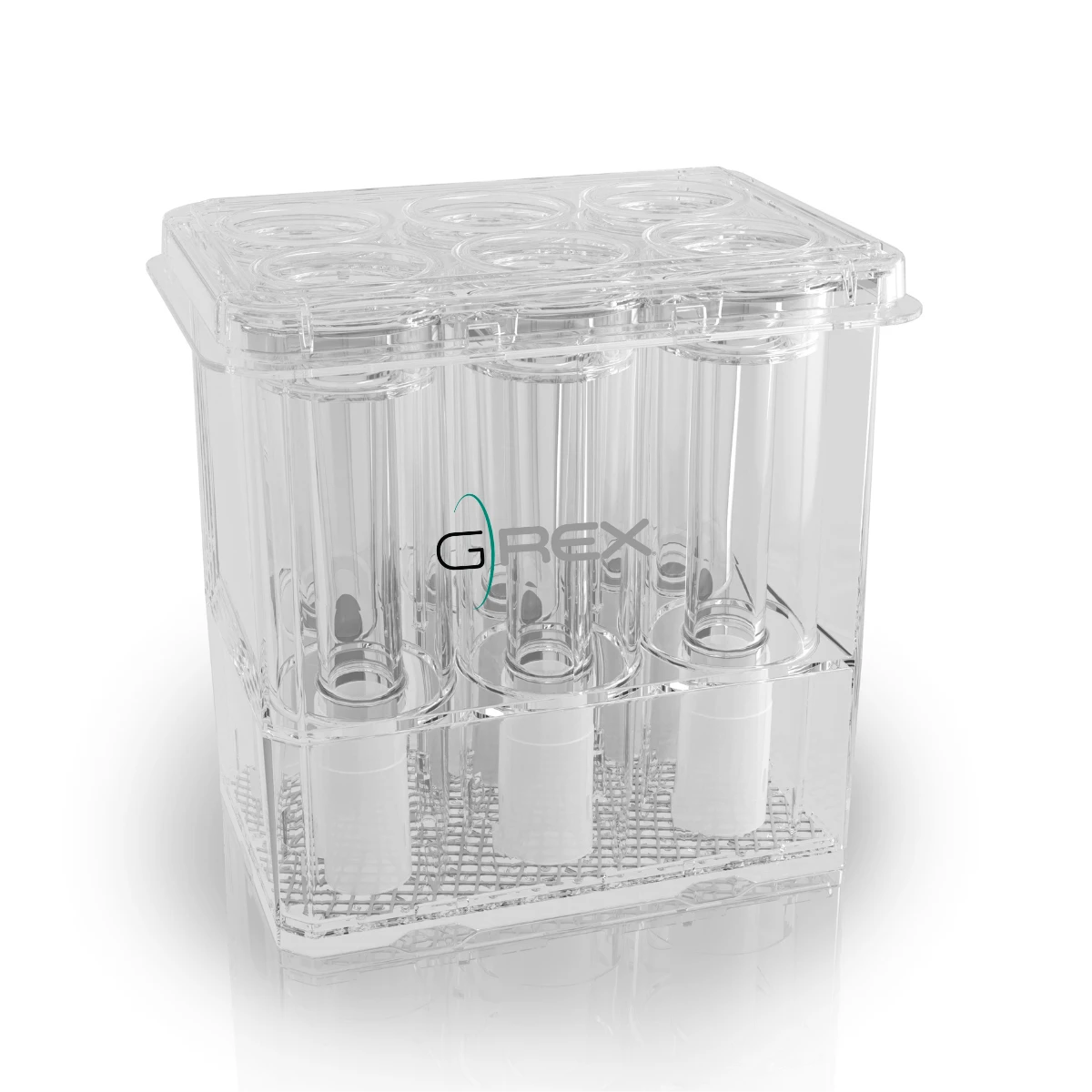
G-Rex® multi-well plates provide an idea small-scale platform for TCR-T cell discovery, process development, and continuous improvement.
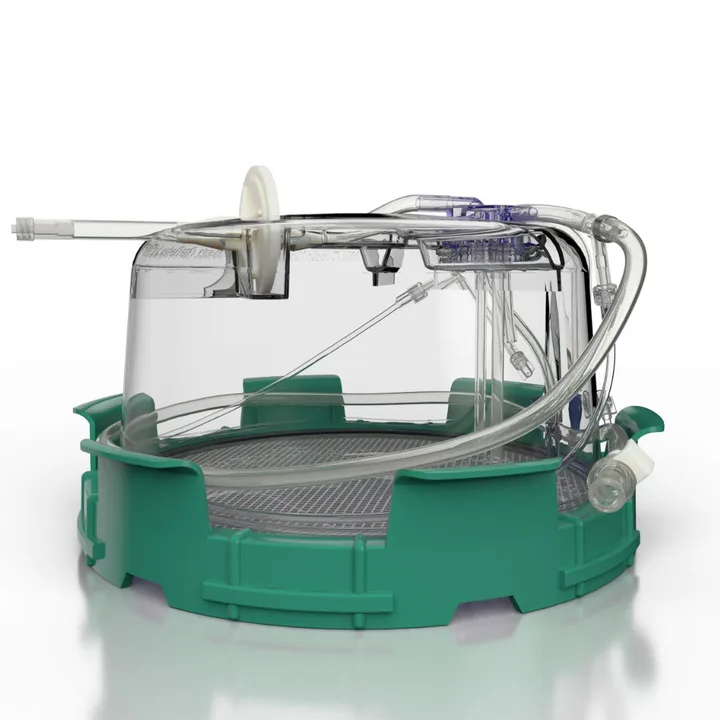
G-Rex® gas-permeable bioreactors deliver the massive cell numbers TCR-T therapies demand. They support high-fold expansion from bench to clinical scale. Scalable formats eliminate costly process re-optimization, making G-Rex® the ideal platform for TCR-T manufacturing from development through GMP production.
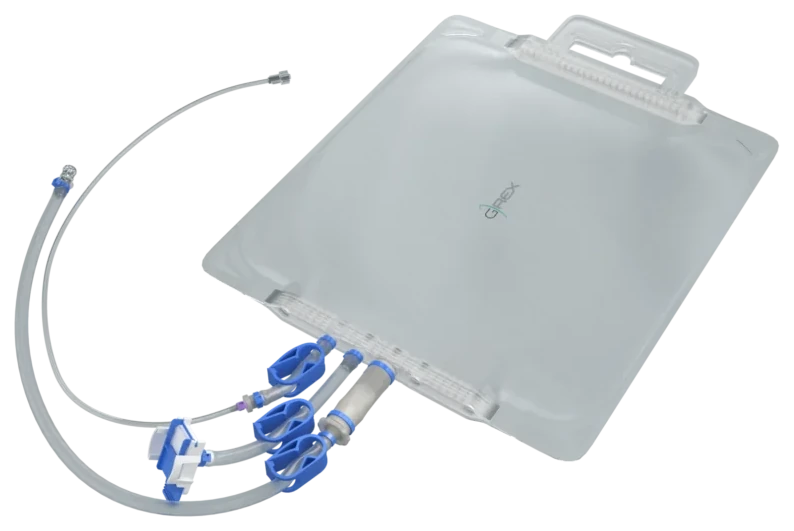
Single-use, gamma-irradiated bags in 250 mL, 1 L, and 5 L formats with ports and tubing designed to connect directly to closed-system G-Rex® devices, keeping media addition, cell transfer, and harvest inside a closed fluid path. Because that compatibility is engineered in, there are no third-party bag assemblies to source, adapt, or qualify.
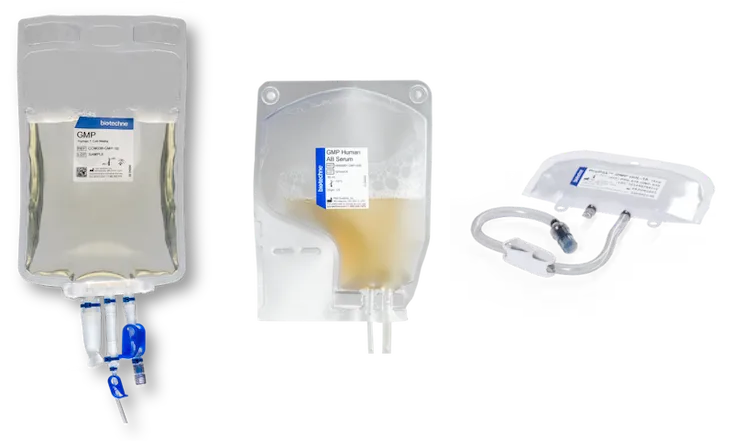
GMP T cell media, GMP Human AB Serum, and GMP cytokines (IL-2, IL-7, IL-15, and IL-21) are all available in the right formats and right aliquots for G-Rex® centric CAR-T cell manufacturing.

Next Steps
Whether you are building a new TCR-T process, transitioning an existing process to G-Rex®, or optimizing a mature manufacturing workflow, our team can help identify the most practical path forward.
Frequently Asked Questions
G-Rex® can support TCR-T programs across the development lifecycle, from TCR discovery and process development through clinical-scale manufacturing. Peer-reviewed academic and industry publications document G-Rex® use across multiple TCR targets, engineering strategies, process configurations, and manufacturing scales.
Yes. G-Rex® well plates can support high-throughput T cell stimulation, expansion, screening, and process-development workflows used to identify and evaluate antigen-specific T cells and TCR candidates. For example, published work from BioNTech demonstrates the use of G-Rex® within a process developed to generate T cell responses against KRAS neoantigens for cell therapy or TCR discovery. [Conn et al., 2025]
Yes. G-Rex® has been used in multiple published programs targeting shared and personalized neoantigens, including KRAS mutations. These programs span TCR discovery, viral TCR engineering, nonviral precision TCR replacement, process development, and clinical-scale manufacturing. [Conn et al., 2025; Foy et al., 2023; Shih et al., 2026]
Yes. Published TCR-T manufacturing processes have used G-Rex® following retroviral [Jin et al., 2018] or lentiviral TCR transduction [Xu et al., 2025] as well as nonviral CRISPR-based TCR replacement [Foy et al., 2023]. Because of G-Rex®'s simplicity, developers can evolve their engineering strategy while maintaining continuity in the underlying platform.
Yes. Closed-system G-Rex® bioreactors are available for cGMP manufacturing. The NCI Surgery Branch published a clinical-scale process using the closed G-Rex®500M-CS for rapid expansion of E6- and E7-specific TCR-transduced T cells. Each G-Rex®500M-CS produced approximately 19 × 10⁹ T cells with >83% viability and high transduction efficiency. Notably, the rapid expansion process took just 14 days. [Jin et al., 2018]
The G-Rex® platform spans multiwell plates used for discovery and process development through larger G-Rex® bioreactors used for clinical manufacturing. G-Rex®'s linear scalability provides a direct path across scales by increasing growth area rather than changing the underlying culture technology. In a 2026 Providence study, the clinical-scale process used the same protocol as the small-scale process with appropriately scaled materials and produced cells with similar phenotypic and functional attributes. [Shih et al., 2026]
Yes. TCR-T therapies can require substantially larger cell doses than many other engineered T cell therapies, often on the order of 10¹⁰ cells. Published NCI work specifically demonstrated G-Rex® as a solution for manufacturing the large numbers of TCR-transduced T cells required for clinical treatment. [Jin et al., 2018; Foy et al., 2023]
Yes. Researchers at Providence Cancer Institute recently demonstrated a 10-day, clinical-scale KRAS-targeted TCR-T manufacturing process using G-Rex®, producing clinically relevant cell numbers while maintaining the phenotypic and functional characteristics targeted by the process. [Shih et al., 2026]
Have a different question? Connect with a G-Rex® Optimization Specialist.
Evidence & References
Explore the published evidence supporting the use of G-Rex® across TCR-T research, development, and clinical manufacturing.