
G-Rex for HSPC Therapy
The simplest way to assemble quality HSPC therapies.
From early research and preclinical development through clinical manufacturing, G-Rex provides a simple, linearly scalable platform for hematopoietic stem and progenitor cell (HSPC) workflows—including non-viral gene modification, post-electroporation recovery, and, when required, cell culture, expansion, or differentiation into downstream cell products.
The Value of Simplicity
In HSPC therapy, simplicity is the ultimate sophistication.
G-Rex is best known for enabling robust T-cell expansion. However, HSPC therapies often have a different manufacturing objective. Many workflows do not require—or desire—prolonged cell expansion. The cells are modified, supported through recovery, and returned to the patient.
Expansion is a capability of G-Rex—not a requirement. G-Rex can support the short, critical steps surrounding HSPC gene modification while retaining the flexibility to accommodate extended culture, expansion, or differentiation when the process requires it.
Support short, critical HSPC culture steps without introducing rockers, mixers, perfusion systems, or external gas controls.
Progress from well plates into closed-system G‑Rex® bioreactors using a consistent culture geometry and surface-area-based process parameters.
Use G‑Rex® for pre-stimulation, gene modification, or post-modification recovery—with extended culture, expansion, or differentiation available when required.
The Emerging Gold Standard
The emerging gold standard for HSPC therapy.
G-Rex is well established in T-cell manufacturing. Its role in HSPC therapy is earlier, but a meaningful pattern is emerging across academia and industry—from gene modification and post-editing recovery to analytical culture, clinical manufacturing, and downstream differentiation.
At the Innovative Genomics Institute, peptide-enabled CRISPR editing was maintained as the process moved from a 96-well plate into G-Rex 24-well, 6-well, and 50M formats. At Kamau Therapeutics, closed-system G-Rex culture was incorporated before and after HDR editing in the optimized manufacturing process for nula-cel, an autologous gene-corrected HSPC product for sickle cell disease. At City of Hope, a G-Rex-based liquid culture method was developed for vector copy number determination and reported for integration into HSPC drug-product release testing.
The evidence extends into long-term culture of edited HSPCs, preclinical expansion with multilineage engraftment, and differentiation into megakaryocytes and other downstream cell products. Together, these programs are building the case for G-Rex across HSPC research, process development, clinical manufacturing, and quality control.
Academic

UC Berkeley

Innovative Genomics Institute
Biotech

Kamau Therapeutics
A Typical Process
HSPC therapy manufacturing made simple.
HSPC workflows vary by disease, starting material, and gene-modification strategy. However, many autologous therapies follow a short vein-to-vein process: collect and enrich the HSPCs, prepare and modify them, support their recovery, and formulate the drug product for return to the patient.
Mobilization & Apheresis
HSPCs are mobilized into the peripheral blood and collected from the patient.
Mobilization agent choice; BM harvest vs. apheresis
CD34+ Enrichment
CD34+ HSPCs are isolated and enriched from the collected starting material.
Intermediate cryopreservation hold
Pre-Stimulation
HSPCs are cultured with the appropriate cytokines to prepare them for gene modification. This step can occur in G-Rex®.
Cytokine cocktail composition; duration; transduction enhancer pre-treatment — all added directly into the G-Rex®
Gene Modification
HSPCs are modified using viral or non-viral approaches. Depending on the delivery method, modification may occur within G-Rex or on an external gene-delivery platform.
LVV transduction can occur inside the G-Rex® (Gagliardi et al., 2019 — Vectofusin-1 in solution; G-Rex®100M-CS IFU explicitly covers activation + transduction + expansion in a single vessel). Electroporation (RNP/mRNA) occurs outside — cells must be removed, electroporated (e.g., MaxCyte GTx), then returned to G-Rex® for recovery (Asperti et al., 2023)
Post-Modification Recovery
Modified HSPCs are supported through a short recovery period before harvest. This step can occur in G-Rex®.
G-Rex® expansion post-electroporation; optional edited cell selection occurs outside (CliniMACS LNGFR enrichment — Asperti et al., 2023), then cells return to G-Rex® for final expansion
Harvest & Wash
The recovered HSPCs are collected and washed to prepare the drug product for formulation.
Harvest is inside (GatheRex IFU — optional rinse-back step explicitly listed); wash/centrifugation is outside
Formulation & Fill/Finish
The HSPC drug product is formulated, filled into the final container, and cryopreserved when required.
Fresh vs. cryo; container format; DMSO wash
Optional process branches: Extended culture or expansion; differentiation into downstream cell products; analytical culture for quality-control testing.
Recommended Products
G-Rex products for HSPC development and manufacturing.
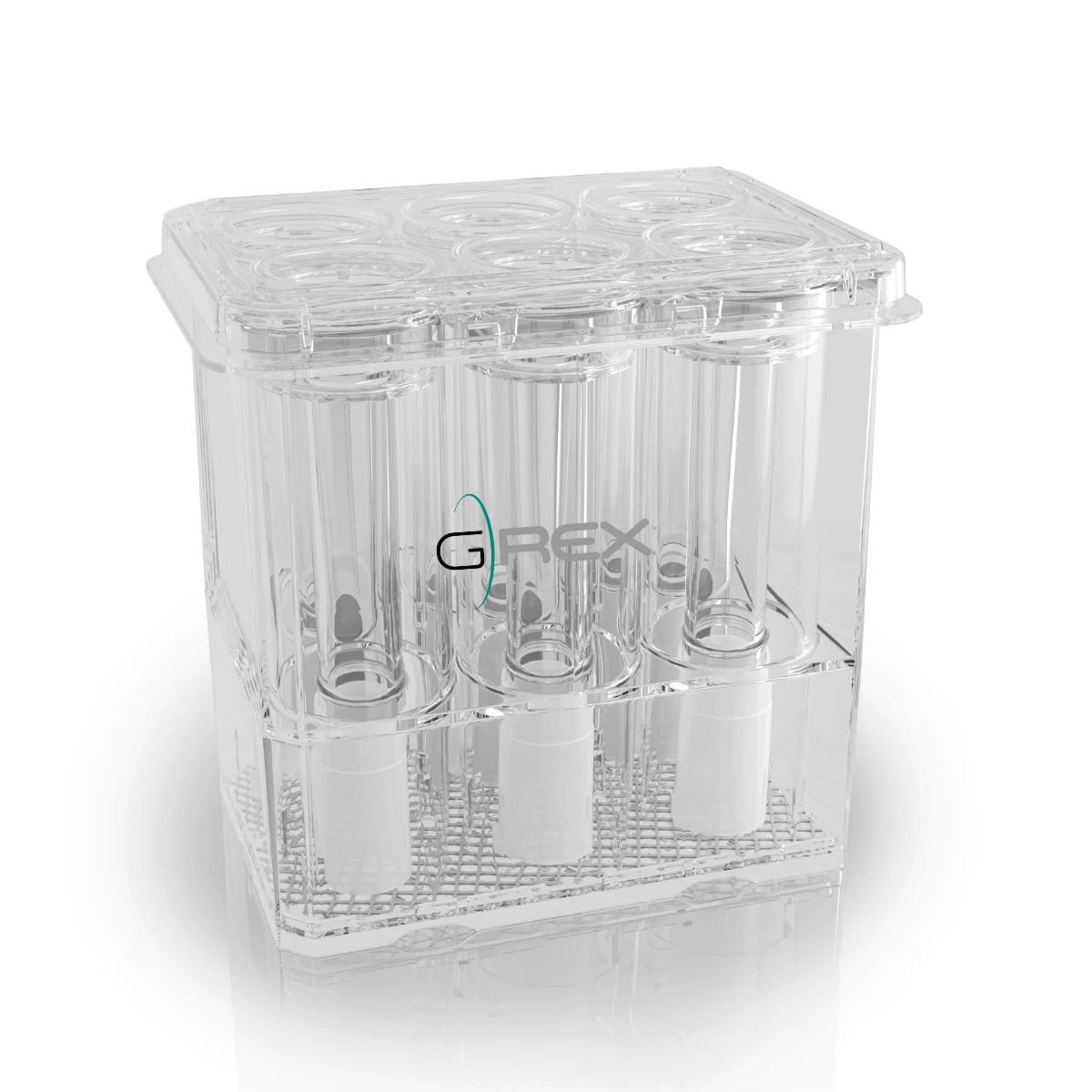
For early research, process development, and small-scale evaluation of HSPC pre-stimulation, gene modification, recovery, culture, and differentiation.
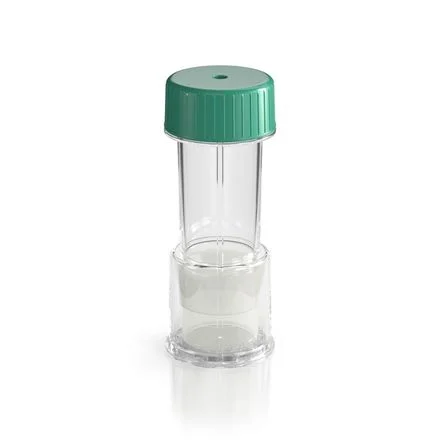
For optimizing short recovery periods or extended HSPC culture using limited starting cell numbers.
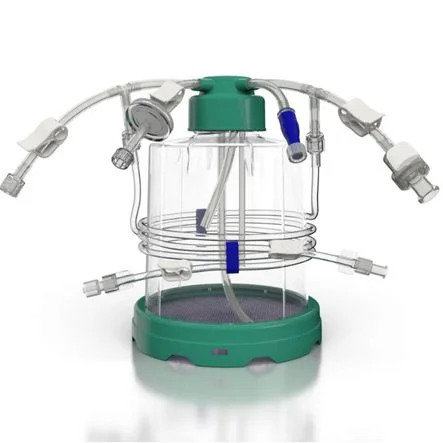
For clinical-scale pre-stimulation, gene-modification workflows, post-modification recovery, and—when required—extended culture or differentiation.
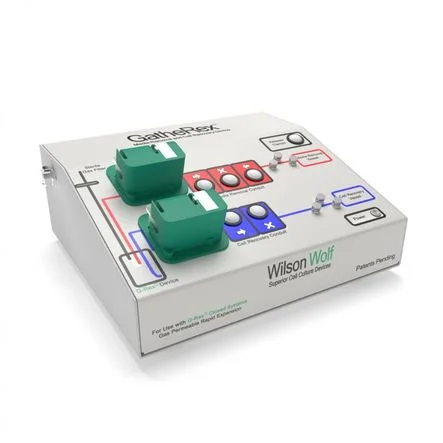
For closed-system media removal, volume reduction, and cell recovery from G-Rex bioreactors before downstream washing and formulation.
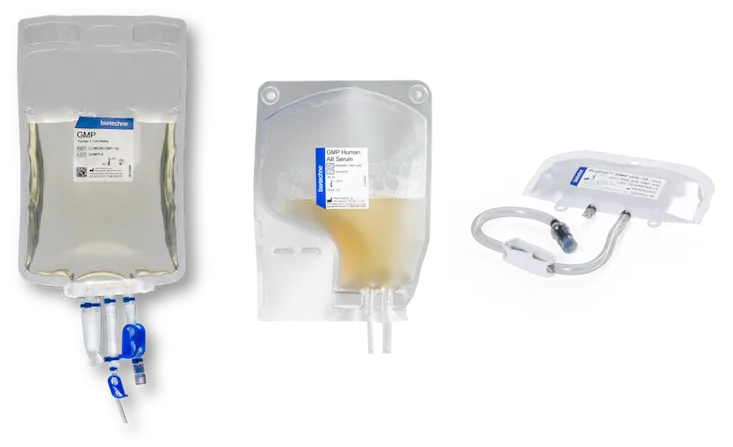
Media, serum, and Bio-Techne cytokines selected to support the requirements of each HSPC process from research through clinical manufacturing.

Next Steps
Whatever phase your HSPC program is at, a G-Rex Optimization Specialist can help.
Whether you are developing a new HSPC process, transitioning an existing workflow into G-Rex, optimizing a current G-Rex process, or preparing to scale manufacturing, our team can help identify the path forward.
Frequently Asked Questions
Frequently asked questions about G-Rex® for HSPC therapy.
Why use G-Rex® when prolonged HSPC expansion is not desired?
Expansion is a capability of G-Rex®—not a requirement. G-Rex® can provide a simple culture environment for short, critical steps surrounding gene modification and recovery, even when increasing cell number is not the manufacturing objective.
Where can G-Rex® be incorporated into an HSPC therapy workflow?
Depending on the process, G-Rex® can support pre-stimulation, gene modification, post-modification recovery, extended culture or expansion, differentiation into downstream cell products, and analytical culture for quality-control testing.
Is G-Rex® linearly scalable for HSPC therapy processes?
G-Rex® formats allow processes to progress from well plates into larger bioreactors while maintaining consistent surface-area-based parameters. At the Innovative Genomics Institute, PERC editing was maintained when the process moved from a 96-well plate into G-Rex® 24-well, 6-well, and 50M formats.
See Dr. Ross Wilson’s presentation on the San Francisco Grant Tour Recap page.
Can G-Rex® support both viral and non-viral gene-modification workflows in HSPC therapy?
Yes. Published and presented HSPC applications include culture following viral transduction as well as non-viral gene-modification strategies such as HDR and peptide-enabled CRISPR editing. The precise role of G-Rex® depends on the delivery method and process design.
How does G-Rex® compare with T-flasks and gas-permeable culture bags in HSPC therapy?
G-Rex® retains the operational simplicity of static culture while providing a linearly scalable family of vessels designed around a consistent culture geometry. HSPC processes can progress from well plates into closed-system bioreactors without multiplying T-flasks or managing flexible culture bags as separate scale-dependent formats.
How does G-Rex® compare with mechanized bioreactors in HSPC therapy?
Mechanized bioreactors depend on powered systems—rockers and mixers that agitate the culture, plus pumps, perfusion loops, sensors, and external gas controls—adding unnecessary variables that require strict control. G-Rex® uses a passive, static architecture that requires none of this supporting machinery. This reduces capital equipment, process complexity, and equipment qualification requirements while preserving closed-system operation at clinical scale.
Can G-Rex® support closed-system clinical manufacturing in HSPC therapy?
Yes. Closed-system G-Rex® bioreactors are available for clinical manufacturing. Kamau Therapeutics incorporated closed-system G-Rex® culture before and after HDR editing in its optimized nula-cel manufacturing process.
Can G-Rex® support applications beyond manufacturing an HSPC transplant product?
Yes. G-Rex® has also been used for analytical HSPC culture supporting vector copy number determination and for differentiating HSPCs into downstream cell products, including megakaryocytes. These applications are distinct from manufacturing an HSPC transplant product.
Have a different question? Connect with a G-Rex® Optimization Specialist.
Evidence & References
Explore the published evidence supporting the use of G-Rex across hematopoietic stem and progenitor cell research, development, and clinical manufacturing.
- Bird GA, Polsky A, Estes P, et al. Expansion of Human and Murine Hematopoietic Stem and Progenitor Cells Ex Vivo without Genetic Modification Using MYC and Bcl-2 Fusion Proteins. PLOS ONE. 2014;9(8):e105525. https://doi.org/10.1371/journal.pone.0105525
- Martinez AF, Miller WM. Enabling Large-Scale Ex Vivo Production of Megakaryocytes from CD34+ Cells Using Gas-Permeable Surfaces. Stem Cells Translational Medicine. 2019;8(7):658-670. https://doi.org/10.1002/sctm.18-0160
- Torres-Coronado M, Arciga I, Browning DL, et al. Novel, Efficient System for Culture of Transduced Hematopoietic Stem Progenitor Cells (HSPC) for Vector Copy Number Determination. Cytotherapy. 2023;25(6 Suppl):S204. https://doi.org/10.1016/S1465-3249(23)00533-9
- Ramos-Hernández I, Fuster-García C, Aguilar-González A, et al. Donor Insertion into CX3CR1 Allows Epigenetic Modulation of a Constitutive Promoter on Hematopoietic Stem Cells and Its Activation upon Myeloid Differentiation. Nucleic Acids Research. 2025;53:gkaf344. https://doi.org/10.1093/nar/gkaf344
- Sahu SU, Castro M, Muldoon JJ, et al. Peptide-Enabled Ribonucleoprotein Delivery for CRISPR Engineering (PERC) in Primary Human Immune Cells and Hematopoietic Stem Cells. Nature Protocols. 2025;20:2735-2770. https://doi.org/10.1038/s41596-025-01154-8
- Skowronski J. Iterative Process Development of an HDR Gene-Edited HSPC Drug Product to Treat Sickle Cell Disease. Presented at the International Society for Cell & Gene Therapy Annual Meeting; 2025. https://www.scaleready.com/resource/iterative-process-development-of-an-hdr-gene-edited-hspc-drug-product-to-treat-sickle-cell-disease/
- Wilson RC. Presentation on scaling PERC-engineered HSPCs in G-Rex. G-Rex Grant Tour, San Francisco; 2026. https://www.scaleready.com/initiatives/g-rex-grant-tour-2026/g-rex-grant-tour-san-francisco-ca/

