G-Rex® for Treg Therapy

The simplest way to assemble quality Treg therapies.

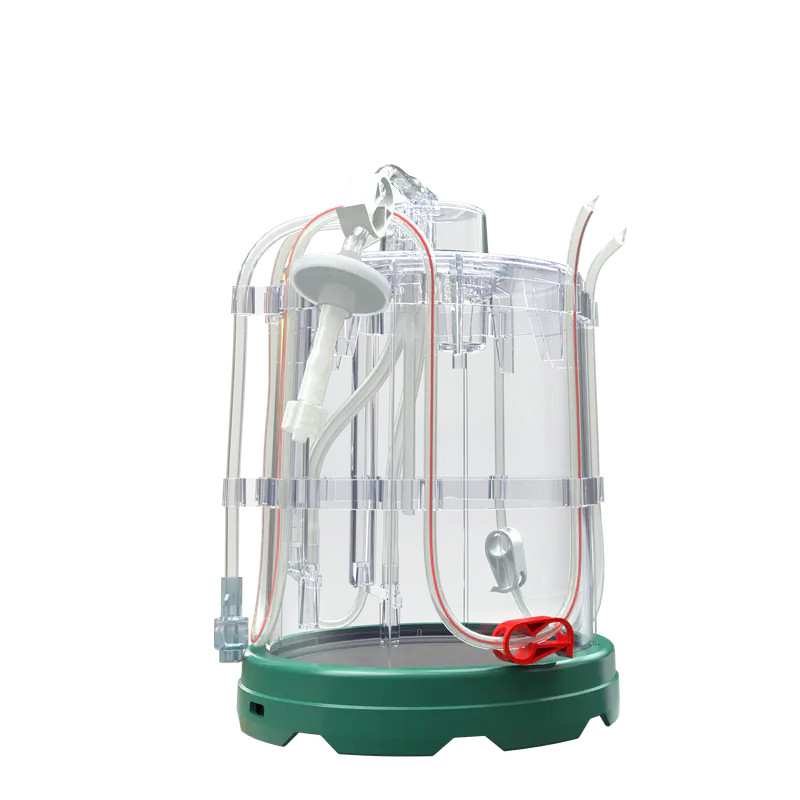
G-Rex® provides a proven, simple, & scalable platform to developers and manufacturers of regulatory T cell therapies from early research and preclinical development through clinical manufacturing.

The Value of Simplicity

In regulatory T cell (Treg) therapy, simplicity is the ultimate sophistication.

G-Rex® is proven to allow developers and manufacturers to expand regulatory T cells from rare starting populations to clinically relevant quantities while preserving the identity, purity, stability, and suppressive function that define the final product.

As isolation, activation, engineering, enrichment, expansion, and cryopreservation add complexity to Treg manufacturing, G-Rex® provides a simple and scalable foundation upon which developers and manufacturers can assemble their unique therapy.

Expand More. Manipulate Less

G-Rex® delivers the large cell numbers Treg therapy demands without the open handling and repeated interventions that introduce contamination risk and process variability

Identity Preserved. Function Intact

G-Rex® expands Tregs to clinical scale without compromising the phenotypic stability and suppressive potency that define the product

Ready to Ship. Ready to Infuse.

G-Rex® supports the full Treg manufacturing journey — including transport and cryopreservation — without adding process complexity at the final, most critical steps.

The Gold Standard

The gold standard for regulatory T cell therapy.

For more than a decade, leading academic and clinical institutions have used G-Rex® to research, develop, and manufacture regulatory T cell therapies. Across a growing body of independent publications, G-Rex® has supported natural and engineered Treg programs from early research and preclinical development through GMP and clinical manufacturing.

Collectively, this referenceable base demonstrates the ability of G-Rex® to produce clinically relevant quantities of regulatory T cells while preserving critical attributes such as identity, purity, viability, stability, and suppressive function. As regulatory T cell therapy has evolved, G-Rex® has evolved alongside it—establishing the platform as the gold standard for the field.

G-Rex

Baylor College of Medicine

Northwestern University

Seattle Children’s Research Institute / University of Washington

University of Pennsylvania

Harvard University

Memorial Sloan Kettering Cancer Center

Cellenkos

Sonoma Biotherapeutics

Charité / Berlin Center for Advanced Therapies

King’s College London

University of Cambridge

University of Oxford

Universidade de São Paulo

Explore the Evidence →

A Typical Process

Regulatory T cell therapy manufacturing made simple.

Regulatory T cell therapies vary by isolation strategy, antigen specificity, engineering approach, and final formulation. Despite these differences, most processes follow a common vein-to-vein manufacturing pathway. G-Rex® provides a simple and scalable foundation around which those choices can be assembled.

Patient Beginning and ending with the patient

Recommended Products

Build your regulatory T cell manufacturing platform in G-Rex®.

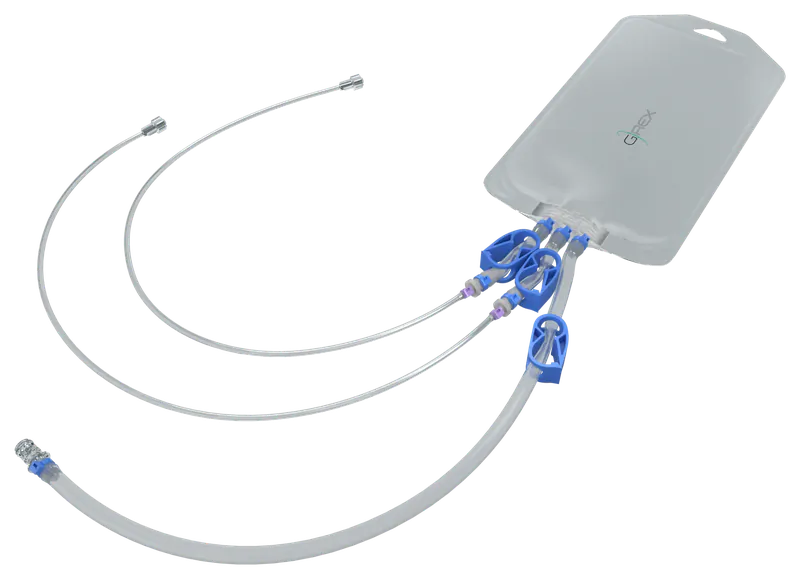
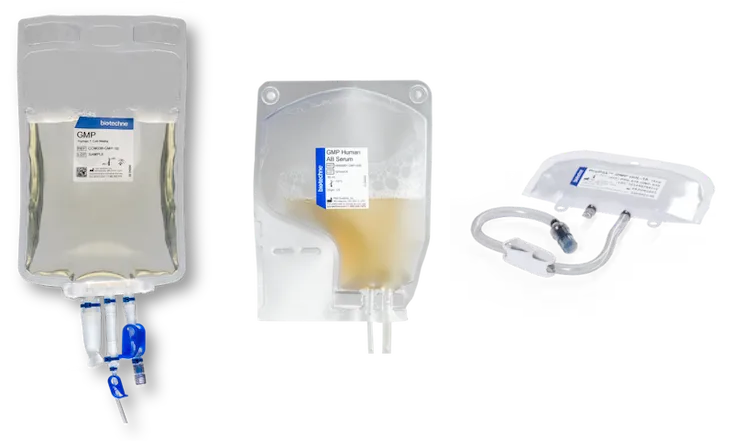
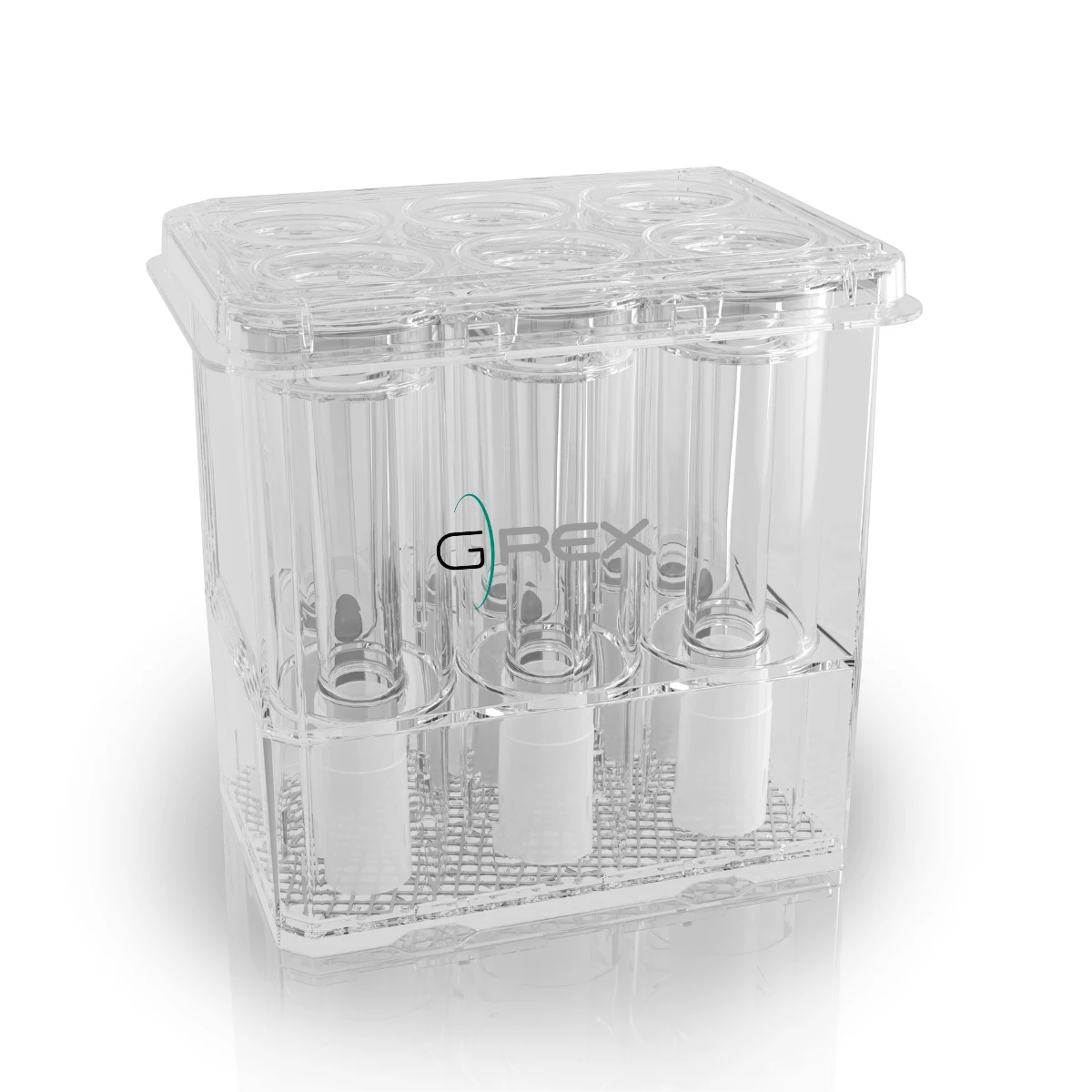
From small-scale research and process development through large-scale clinical manufacturing, the G-Rex® product family provides a common platform for developing, optimizing, and scaling regulatory T cell manufacturing processes. Select the G-Rex® format and complementary technologies that fit the needs of your process today—with a pathway to evolve as your therapy advances.
Explore G-Rex® Products →

Next Steps

Whatever phase your regulatory T cell program is at, a G-Rex® Optimization Specialist can help.

Whether you are building a new regulatory T cell process, transitioning an existing process to G-Rex®, optimizing a mature manufacturing workflow, or preparing to scale, our team can help identify the most practical path forward.

Frequently Asked Questions

Frequently asked questions about G-Rex® for regulatory T cell therapy.

Why is regulatory T cell manufacturing challenging?

Tregs represent a small fraction of circulating T cells and must be isolated and expanded while preserving identity, purity, stability, viability, and suppressive function. Engineering and other additional unit operations can further increase manufacturing complexity.

Small-scale G-Rex® bioreactors are popular among Treg developers and manufacturers because their 5 cm² to 10 cm² gas-permeable surface areas allow them to accommodate low starting cell numbers.

What types of regulatory T cell therapies have been developed using G-Rex®?

Published studies have used G-Rex® in the development and manufacturing of natural, gene-edited, engineered, and CAR-Treg therapies. This evidence spans early research and preclinical development through GMP and clinical manufacturing.

Has G-Rex® been used for clinical regulatory T cell manufacturing?

Yes. Published clinical work documents the manufacture and administration of ex vivo expanded regulatory T cells. The appropriate clinical evidence and claims should remain tied to the specific product, process, study population, and reported outcomes.

Does G-Rex® preserve regulatory T cell phenotype and function?

Multiple independent studies reported expanded products with Treg-associated phenotypes and retained in vitro—and in some studies in vivo—suppressive activity. Outcomes remain dependent on the full process, including starting material, selection, stimulation, media, cytokines, pharmacologic supplements, culture duration, and harvest criteria.

Can G-Rex® support engineered or CAR-Treg workflows?

Yes. G-Rex® expansion has been incorporated after CRISPR editing, homology-directed repair, lentiviral transduction, and affinity enrichment in published engineered Treg and CAR-Treg workflows. The exact sequence and conditions depend on the product design.

How does a regulatory T cell process scale in G-Rex®?

The G-Rex® platform maintains consistent geometry across formats, allowing developers to progress from M-series well plates and small-scale G-Rex®5M or G-Rex®10M bioreactors into G-Rex®50M and G-Rex®100M bioreactors.

Which G-Rex® device is appropriate for my regulatory T cell process?

The right device depends on starting cell number, seeding density, media volume, expansion target, process duration, target dose, closed-system requirements, and desired scale-up or scale-out strategy. A G-Rex® Optimization Specialist can help translate these inputs into an appropriate device and process plan.

Have a different question? Connect with a G-Rex® Optimization Specialist.

Evidence & References

Peer-reviewed evidence from academia and industry.

Explore the published evidence supporting the use of G-Rex across regulatory T cell research, development, and clinical manufacturing.

  1. Chakraborty R, et al. Robust and cost effective expansion of human regulatory T cells highly functional in a xenograft model of graft-versus-host disease. Haematologica. 2013;98(4):533–537.
  2. Lei H. Human natural regulatory T cells subsets: Functional characterization and T cell receptor repertoire analysis [doctoral dissertation]. Humboldt-Universität zu Berlin; 2014.
  3. Mathew JM, et al. A phase I clinical trial with ex vivo expanded recipient regulatory T cells in living donor kidney transplants. Scientific Reports. 2018;8:7428.
  4. Marín Morales JM, et al. Automated clinical grade expansion of regulatory T cells in a fully closed system. Frontiers in Immunology. 2019;10:38.
  5. Frary E, et al. Optimization and scale-up of Treg expansion from CD4 cells in G-Rex6M plates [poster]. 2020.
  6. Kaiser D, et al. Freezing medium containing 5% DMSO enhances the cell viability and recovery rate after cryopreservation of regulatory T cell products ex vivo and in vivo. Frontiers in Cell and Developmental Biology. 2021;9:750286.
  7. Ellis GI, et al. Generation of non-human primate CAR Tregs using artificial antigen-presenting cells, simian tropic lentiviral vectors, and antigen-specific restimulation. STAR Protocols. 2022;3:101784.
  8. Shimon O, et al. CRISPR-Cas9 engineering of human T regulatory cells—Design and optimization of a manufacturing process. Molecular Immunology. 2025;184:13–21.
  9. Tripathi SK, et al. HLA-A2 CAR/IL-2-CISC engineered Treg display robust in vitro and in vivo antigen-specific regulatory function. Molecular Therapy: Methods & Clinical Development. 2025;33.
  10. Edwards W, et al. Perfusion microbioreactor for CAR-Treg manufacturing. iScience. 2026;29:115246.
  11. Honaker Y, et al. Preclinical efficacy and safety assessment of engineered regulatory T cells for treatment of IPEX and other autoimmune disorders. 2026.
  12. Zarrinrad G, et al. Clinical development of tacrolimus-resistant regulatory T cells to enable simultaneous immunosuppression and immune regulation. 2026.
  13. Galinas P. CoRegion’s Science and Future Plans. G-Rex Grant Tour — Houston. ScaleReady. 2025.
  14. Yee C. Solid Tumors: The Final Frontier. G-Rex Grant Tour — Houston. ScaleReady. 2025.
  15. ScaleReady. ScaleReady Announces a G-Rex® Grant has been awarded to Sonoma Biotherapeutics. Press release. ScaleReady Newsroom / PR Newswire. 3 November 2025.