
G-Rex® for NK Cell Therapy
From donor-derived NK cells to iPSC-derived and genetically engineered CAR-NK therapies, G-Rex® provides a simple, scalable manufacturing foundation that can support your process from early development through clinical manufacturing.
The Value of Simplicity
NK cell manufacturing can involve a wide range of starting materials, engineering strategies, activation methods, media, cytokines, and expansion approaches. G-Rex® provides a simple, flexible manufacturing foundation that can support those differences without making the culture system itself another source of unnecessary complexity.
From early research and preclinical development through large-scale clinical manufacturing, the same underlying G-Rex® technology can be used across formats to help maintain process continuity as requirements evolve.
G-Rex® is well documented to facilitate robust expansion of NK cells from a variety of starting materials including peripheral blood, cord blood, and induced pluripotent stem cells.
Whether using feeder cells, feeder-free approaches, or engineered CAR constructs, G-Rex® has supported NK cell expansion across diverse manufacturing strategies
Your same core process (on a per cm²) can be replicated across different log scales while maintaining continuity in your process and your drug product. This enables you to oscillate freely between small-scale G-Rex® well plates and large clinical scale G-Rex® bioreactors for time- and cost-efficient development and process improvement.
The Gold Standard
For more than a decade, G-Rex® has evolved alongside NK cell therapy. Across donor-derived, cord blood-derived, iPSC-derived, genetically engineered, and CAR-NK approaches, academic researchers and industry developers have repeatedly incorporated G-Rex® as their programs move from discovery into process development, GMP, and clinical manufacturing.
Published workflows now span peripheral blood, cord blood, and iPSC-derived NK cells; feeder-based and feeder-free processes; viral and non-viral engineering; and both open and closed G-Rex® formats. G-Rex®-manufactured NK cell products have also progressed into Phase I clinical use.
As the field continues to diversify, G-Rex® provides a common manufacturing foundation across an increasingly broad range of NK cell therapy approaches.
















A Typical Process
There is no single way to make an NK cell therapy. Starting material, activation strategy, engineering method, and manufacturing scale can all vary. Explore how G-Rex® can fit into the process that works for your NK cell therapy.
Starting Material
Engineering
Viral OR Non-viral
Recommended Products
ScaleReady brings together G-Rex® manufacturing technology with Bio-Techne media, cytokines, and gene-engineering tools to support NK cell process development from research through clinical manufacturing.
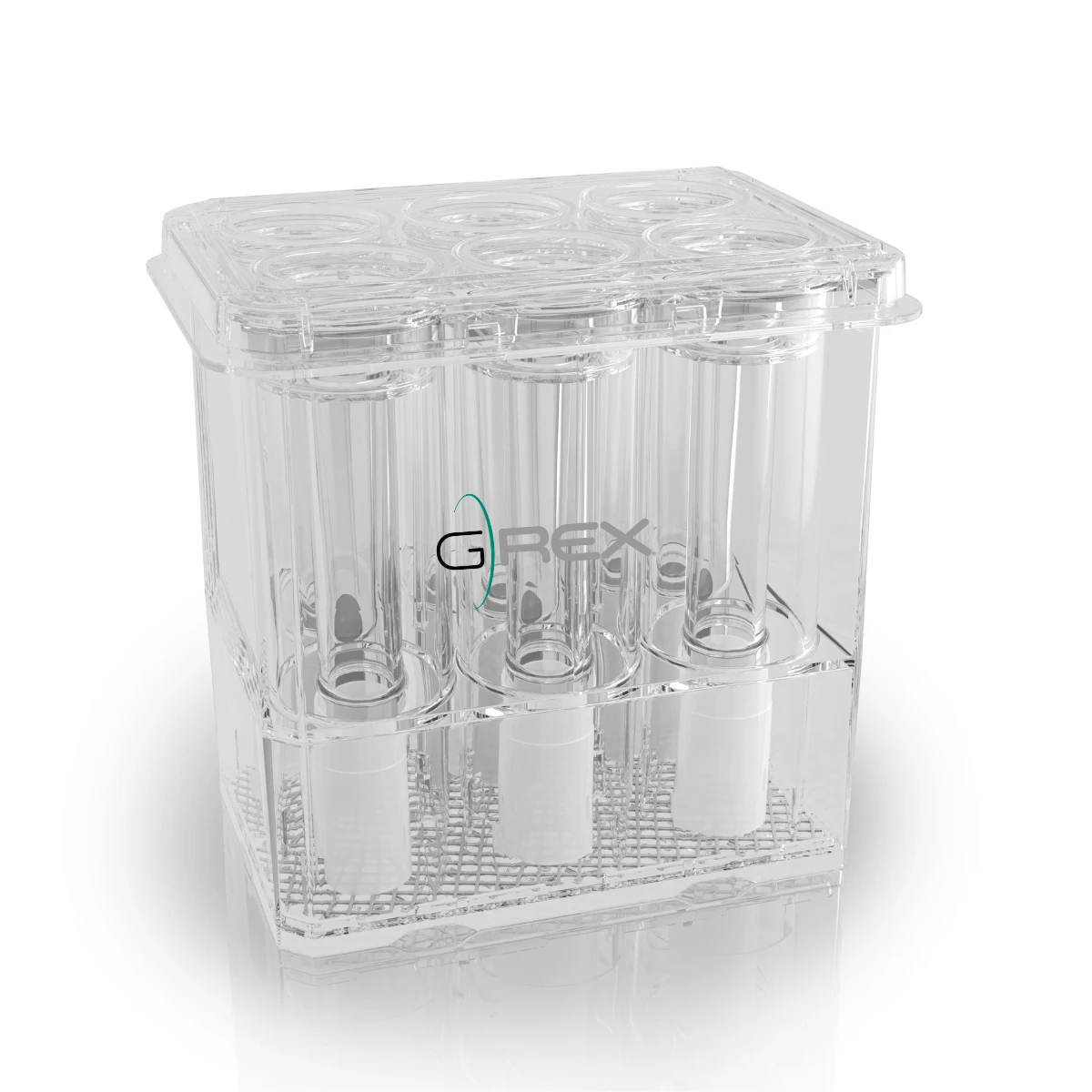
G-Rex® Well Plates enable researchers to evaluate NK cell candidates, cytokine combinations, feeder strategies, and process conditions in parallel before committing to larger vessels
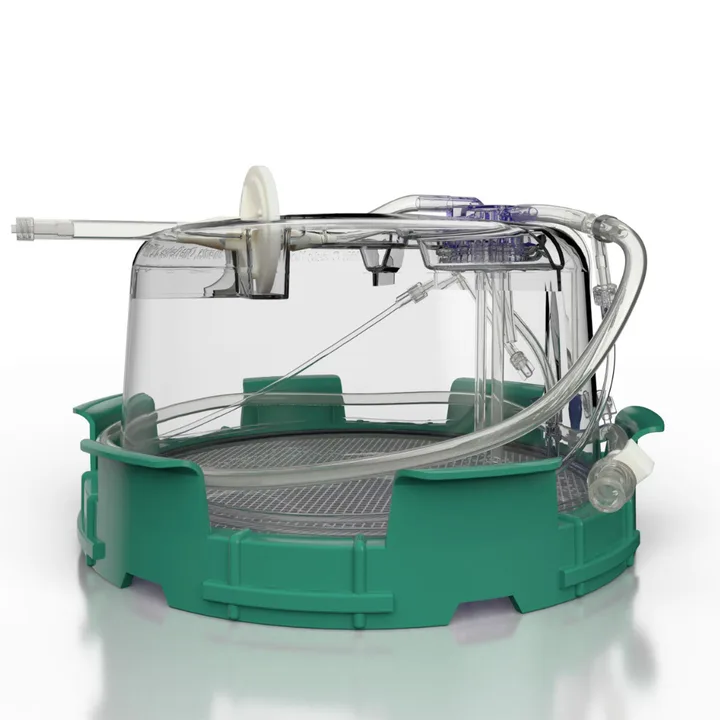
Transition from process development into clinical manufacturing using larger G-Rex® bioreactors designed to deliver the NK cell numbers required for clinical dosing while maintaining the same gas-permeable, static culture environment established at bench scale.
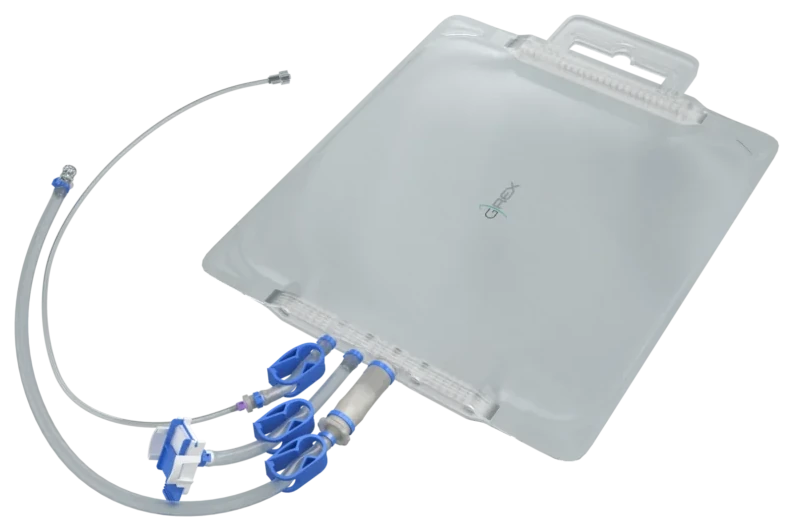
Single-use, gamma-irradiated bags in 250 mL, 1 L, and 5 L formats with ports and tubing designed to connect directly to closed-system G-Rex® devices, keeping media addition, cell transfer, and harvest inside a closed fluid path. Because that compatibility is engineered in, there are no third-party bag assemblies to source, adapt, or qualify.
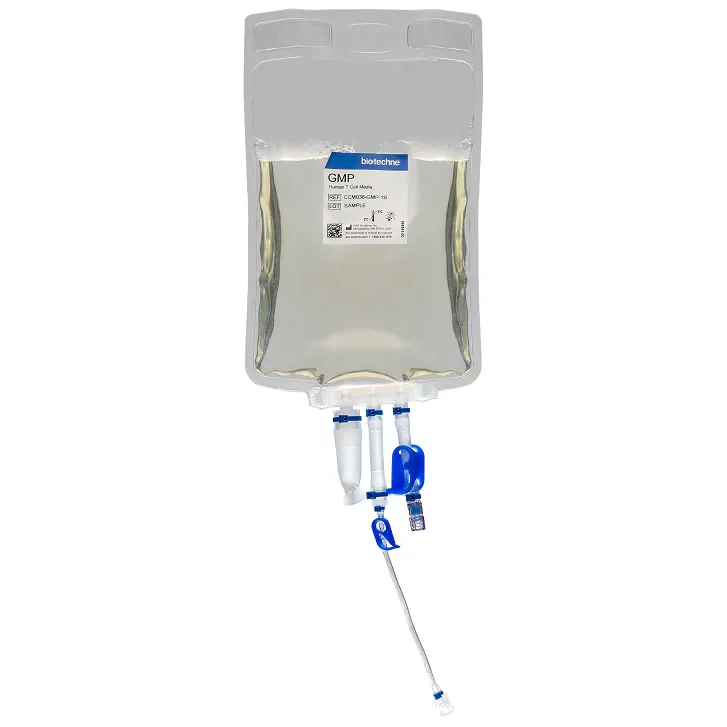
A complete GMP reagent ecosystem. Serum-free, xeno-free ExCellerate™ media paired with animal-free GMP IL-2, IL-7, IL-15, and IL-21 give a process consistent bioactivity, closed-system-ready formats, and a direct path from RUO to GMP without a reagent change. Manufactured by Bio-Techne/R&D Systems under ISO 9001:2015 / ISO 13485:2016 for preclinical and ex vivo clinical cell therapy applications.

Next Steps
Whether you are developing a new NK cell process, transitioning an existing workflow into G-Rex®, optimizing a current G-Rex® process, or preparing to scale manufacturing, our team can help identify the path forward.
Frequently Asked Questions
Absolutely. Clinical-scale NK manufacturing in G-Rex® is already well established. Published workflows have produced tens of billions of NK cells under GMP conditions, and G-Rex®-manufactured NK cell products have been administered to patients in clinical studies. G-Rex® has also been incorporated into GMP CAR-NK manufacturing workflows for clinical trials.
For commercial-scale production, G-Rex® supports both scale-up and scale-out, allowing manufacturing capacity to increase without fundamentally changing the underlying process. Published studies have demonstrated comparable NK and CAR-NK performance as processes moved from smaller G-Rex® formats into larger closed G-Rex® bioreactors.
Commercial-scale NK manufacturing has not yet been demonstrated through an approved NK-cell therapy because the field itself has not yet reached that stage of commercialization. That is a maturity-of-the-modality limitation - not an identified limitation of G-Rex®.
Sources: Otegbeye et al. (2022); Liu et al. (2021); Wang et al. (2024).
Yes. Published NK-cell workflows have demonstrated process continuity across G-Rex® formats. Lapteva et al. reported that NK-cell fold expansion was the same in small G-Rex®10 and larger G-Rex®100 cultures when the process was run using the same underlying conditions. Liu et al. later described adapting a G-Rex® M100 process from preclinical protocols to linearly scale CAR-NK manufacturing to the desired GMP yield, and Wang et al. demonstrated comparable NK expansion, purity, phenotype, and function across G-Rex® multi-well plates and larger G-Rex®100M open- and closed-system bioreactors.
Linear scalability is one of the core advantages of the G-Rex® platform: capacity can increase while preserving the underlying culture architecture rather than requiring the process to be re-engineered around a different expansion technology.
Sources: Lapteva et al. (2016); Liu et al. (2021); Wang et al. (2024).
Scale-out provides a modular approach to manufacturing capacity. Developers can add or remove G-Rex® bioreactors as production requirements change rather than designing the entire process around a single maximum batch size. Distributing expansion across multiple vessels can also limit the consequence of an event isolated to one culture rather than concentrating the entire expansion in a single vessel.
Yes. Published G-Rex® workflows include NK cells derived from peripheral blood and apheresis products, cord blood, and iPSCs. This gives developers flexibility to use the same underlying G-Rex® manufacturing technology across very different NK-cell sources.
Sources: Lapteva et al. (2012); Liu et al. (2021); Lupo et al. (2021).
Yes. G-Rex® has been incorporated into NK manufacturing workflows using viral CAR engineering, non-viral engineering, gene editing, armored CAR-NK cells, and engineered iPSC-derived NK cells. Depending on the workflow, the engineering step itself may occur outside G-Rex® before the engineered cells return to G-Rex® for continued expansion.
Sources: Lapteva et al. (2016); Liu et al. (2021); Wood et al. (2022); Wang et al. (2024); Lupo et al. (2024); Robbins et al. (2026).
No. G-Rex® can support both feeder-based and feeder-free NK manufacturing strategies. Recent peer-reviewed CAR-NK studies have demonstrated feeder-free manufacturing approaches using G-Rex®, while a substantial body of earlier NK literature demonstrates feeder-based processes.
Sources: Khanal et al. (2025); Khanal & Bhattarai (2025); Ruppel et al. (2026).
Yes. G-Rex® has been used successfully with both feeder-dependent and feeder-free NK cell manufacturing strategies. On the feeder cell side, K562-based and membrane-bound IL-21 feeder systems have both been demonstrated in G-Rex®, achieving robust NK cell expansion from peripheral blood with yields suitable for clinical use.
For feeder-free approaches, G-Rex® has supported expansion of cord blood–derived CAR-NK cells, iPSC-derived NK cells, and CAR-NK cells using cytokine-based or engineered antigen-presenting cell conditions, all while retaining comparable phenotype, cytotoxicity, and post-thaw function to small-scale cultures. Across both strategies, the G-Rex® culture environment remains consistent. The platform accommodates your manufacturing approach, not the other way around.
Sources: Lapteva et al. (2016); Ojo et al. (2019); Liu et al. (2021); Lupo et al. (2024); Robbins et al. (2026); Wang et al. (2024).
That depends on the process. G-Rex® can provide a manufacturing environment for multiple stages of NK-cell development and production, including activation and expansion, with published workflows demonstrating different configurations. Some engineered NK processes perform gene transfer outside G-Rex® and return the cells to G-Rex® for subsequent expansion, while other unit operations may be incorporated depending on the process design.
Sources: Lapteva et al. (2016); Liu et al. (2021); Wang et al. (2024).
Have a different question? Connect with a G-Rex® Optimization Specialist.
Evidence & References
Explore the published evidence supporting the use of G-Rex across NK cell research, development, and clinical manufacturing.