Non-viral precision T cell receptor replacement for personalized cell therapy
Overview
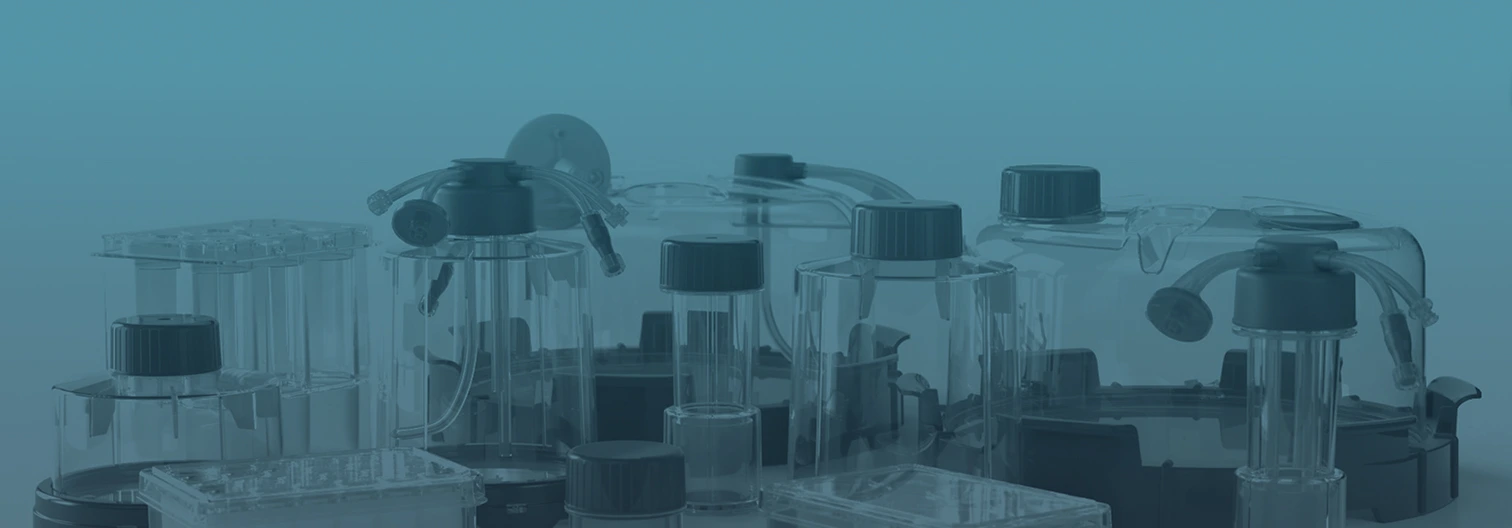
This phase 1 trial used non-viral CRISPR-Cas9 editing to replace endogenous TCRs with personalized neoantigen-specific TCRs in T cells. Clinical-grade manufacturing of the neoTCR T cell products included activation and expansion steps performed in G-Rex® 100M CS
What this paper found
A clinical-grade, non-viral CRISPR–Cas9 process replaced the endogenous T cell receptor with patient-specific neoantigen-specific TCRs (neoTCRs) in autologous T cells, and was tested in 16 patients with refractory solid cancers in a phase I dose-escalation trial. Each patient received up to three distinct neoTCR products across three dose levels. One patient had grade 1 cytokine release syndrome and one had grade 3 encephalitis; five patients had stable disease and eleven progressed. Infused neoTCR T cells were found in tumour biopsies, where 16 of 22 infused populations were detected. A culture medium change raised neoTCR knock-in efficiency from 13.4% to 23.0%. Median peak circulating neoTCR T cells rose from 1.9% at dose level 1 to 15.0% at dose level 3 after the lymphodepletion regimen was intensified.
Note: Phase I dose-escalation study in 16 patients; the authors note that in vivo expansion of the infused cells was limited in patients who received the original conditioning chemotherapy and the earlier manufacturing processes.
This study demonstrates the feasibility of isolating and cloning multiple TCRs that recognize mutational neoantigens. — Susan P. Foy, Kyle Jacoby, Daniela A. Bota, Theresa Hunter, Zheng Pan, Eric Stawiski, Yan Ma, William Lu, Songming Peng, Clifford L. Wang, Benjamin Yuen, Olivier Dalmas, Katharine Heeringa, Barbara Sennino, Andy Conroy, Michael T. Bethune, Ines Mende, William White, Monica Kukreja, Swetha Gunturu, Emily Humphrey, Adeel Hussaini, Duo An, Adam J. Litterman, Boi Bryant Quach, Alphonsus H. C. Ng, Yue Lu, Chad Smith, Katie M. Campbell, Daniel Anaya, Lindsey Skrdlant, Eva Yi-Hsuan Huang, Ventura Mendoza, Jyoti Mathur, Luke Dengler, Bhamini Purandare, Robert Moot, Michael C. Yi, Roel Funke, Alison Sibley, Todd Stallings-Schmitt, David Y. Oh, Bartosz Chmielowski, Mehrdad Abedi, Yuan Yuan, Jeffrey A. Sosman, Sylvia M. Lee, Adam J. Schoenfeld, David Baltimore, James R. Heath, Alex Franzusoff, Antoni Ribas, Arati V. Rao, Stefanie J. Mandl, Nature
Study details
- Authors
- Susan P. Foy, Kyle Jacoby, Daniela A. Bota, Theresa Hunter, Zheng Pan, Eric Stawiski, Yan Ma, William Lu, Songming Peng, Clifford L. Wang, Benjamin Yuen, Olivier Dalmas, Katharine Heeringa, Barbara Sennino, Andy Conroy, Michael T. Bethune, Ines Mende, William White, Monica Kukreja, Swetha Gunturu, Emily Humphrey, Adeel Hussaini, Duo An, Adam J. Litterman, Boi Bryant Quach, Alphonsus H. C. Ng, Yue Lu, Chad Smith, Katie M. Campbell, Daniel Anaya, Lindsey Skrdlant, Eva Yi-Hsuan Huang, Ventura Mendoza, Jyoti Mathur, Luke Dengler, Bhamini Purandare, Robert Moot, Michael C. Yi, Roel Funke, Alison Sibley, Todd Stallings-Schmitt, David Y. Oh, Bartosz Chmielowski, Mehrdad Abedi, Yuan Yuan, Jeffrey A. Sosman, Sylvia M. Lee, Adam J. Schoenfeld, David Baltimore, James R. Heath, Alex Franzusoff, Antoni Ribas, Arati V. Rao, Stefanie J. Mandl
- Institution
- PACT Pharma, South San Francisco, CA, USA · Department of Neurology and Chao Family Comprehensive Cancer Center, University of California, Irvine, CA, USA · Institute for Systems Biology, Seattle, WA, USA · Department of Medicine, Division of Hematology–Oncology, University of California, Los Angeles (UCLA), Los Angeles, CA, USA · Division of Hematology/Oncology, Department of Medicine, University of California, San Francisco, CA, USA · Jonsson Comprehensive Cancer Center at the University of California, Los Angeles, CA, USA · Division of Hematology/Oncology, Department of Internal Medicine, University of California Davis Comprehensive Cancer Center, Sacramento, CA, USA · Department of Medical Oncology and Therapeutics Research, City of Hope National Medical Center, Duarte, CA, USA · Department of Medicine and Robert H. Lurie Cancer Center, Northwestern University, Evanston, IL, USA · Clinical Research Division, Fred Hutchinson Cancer Research Center, Seattle, WA, USA · Thoracic Oncology Service, Division of Solid Tumor Oncology, Department of Medicine, Memorial Sloan Kettering Cancer Center, Weill Cornell Medical College, New York, NY, USA · Division of Biology and Biological Engineering, California Institute of Technology, Pasadena, CA, USA
- Journal
- Nature
- Year
- 2022
- G-Rex® model(s)
- G-Rex®100M-CS, G-Rex®24 Well Plate
- Cell type(s)
- TCR T Cells
- Application area
- Solid tumor
- Study phase
- Phase I
How G-Rex® was used
During TCR discovery, healthy-donor T cells were electroporated with CRISPR–Cas9 ribonucleoproteins and a patient-specific neoTCR template, then cultured in a 24-well G-Rex® for 4–5 days with medium changes as needed to test each candidate neoTCR. For clinical manufacture, up to 715 × 10^6 CD4 and CD8 T cells were seeded in a G-Rex® 100M CS with IL-7 and IL-15 and activated for 44 hours with TransACT. After electroporation, each lot was expanded in G-Rex® vessels, with medium exchanges and splits into additional G-Rex® vessels, and cells were cryopreserved on day 13.
Explore related
Full citation
Foy SP, Jacoby K, Bota DA, et al. Non-viral precision T cell receptor replacement for personalized cell therapy. Nature. 2023;615(7953):687-696.
Building a similar workflow?
Talk to a ScaleReady specialist about how the G-Rex® platform can support your program — from process development to clinical-scale manufacturing.