Virus Induced Lymphocytes (VIL) as a novel viral antigen‑specific T cell therapy for COVID‑19 and potential future pandemics
Overview
The authors developed Virus Induced Lymphocytes (VIL) for COVID-19 using artificial APCs (VIPR particles). G-Rex® plates were used to facilitate rapid expansion (7 days) of SARS-CoV-2 specific T cells. The resulting VILs showed a polyfunctional cytokine profile and effector memory phenotype.
What this paper found
Bead-based artificial antigen-presenting cells (VIPR particles) carrying a SARS-CoV-2 Spike peptide-MHC pentamer and anti-CD28 antibodies expanded virus-specific CD8+ T cells from convalescent COVID-19 donors more than 1000-fold on average within 7 days. T cells were cultured with one particle per 20 T cells in medium with 6000 IU/ml IL-2, IL-7, IL-15 and N-acetylcysteine, in G-Rex® 24-well plates. Cultures seeded with 1 × 10^6 T cells reached 2.6 to 4.5 × 10^7 cells by day 7, with an average of 2.4 × 10^5 SARS-CoV-2-specific CD8+ T cells per million T cells cultured. CMV-specific CD8+ T cells expanded on average more than 700-fold. Expanded virus-specific cells showed an effector memory phenotype and produced IFN-γ, TNFα and IL-2 on peptide restimulation.
Note: Ex vivo study using T cells from convalescent donors; the authors note that whether the expanded cells provide lasting immunological memory still requires in vivo assessment in a viral infection setting.
Our approach enables an over 1000-fold expansion in the numbers of viral antigen-specific T cells in just 7-days from isolation of a patient’s T cells, providing a higher quantity of activated, polyfunctional effector memory cells. — Rohan Sivapalan, Jinyan Liu, Krishnendu Chakraborty, Elisa Arthofer, Modassir Choudhry, Philip S. Barie, Dan H. Barouch, Tom Henley, Scientific Reports
Study details
- Authors
- Rohan Sivapalan, Jinyan Liu, Krishnendu Chakraborty, Elisa Arthofer, Modassir Choudhry, Philip S. Barie, Dan H. Barouch, Tom Henley
- Institution
- Intima Bioscience, Inc., New York, NY, USA · Center for Virology and Vaccine Research, Beth Israel Deaconess Medical Center, Harvard Medical School, Boston, MA, USA · Ragon Institute of Massachusetts General Hospital, Massachusetts Institute of Technology, and Harvard University, Cambridge, MA, USA · Division of Trauma, Burns, Acute and Critical Care, Department of Surgery, and Division of Medical Ethics, Department of Medicine, Weill Cornell Medicine, New York-Presbyterian Hospital, Weill Cornell Medical Center, New York, NY, USA
- Journal
- Scientific Reports
- Year
- 2021
- G-Rex® model(s)
- G-Rex®24 Well Plate
- Cell type(s)
- VST Cells
- Application area
- Infectious disease
- Study phase
- Preclinical
How G-Rex® was used
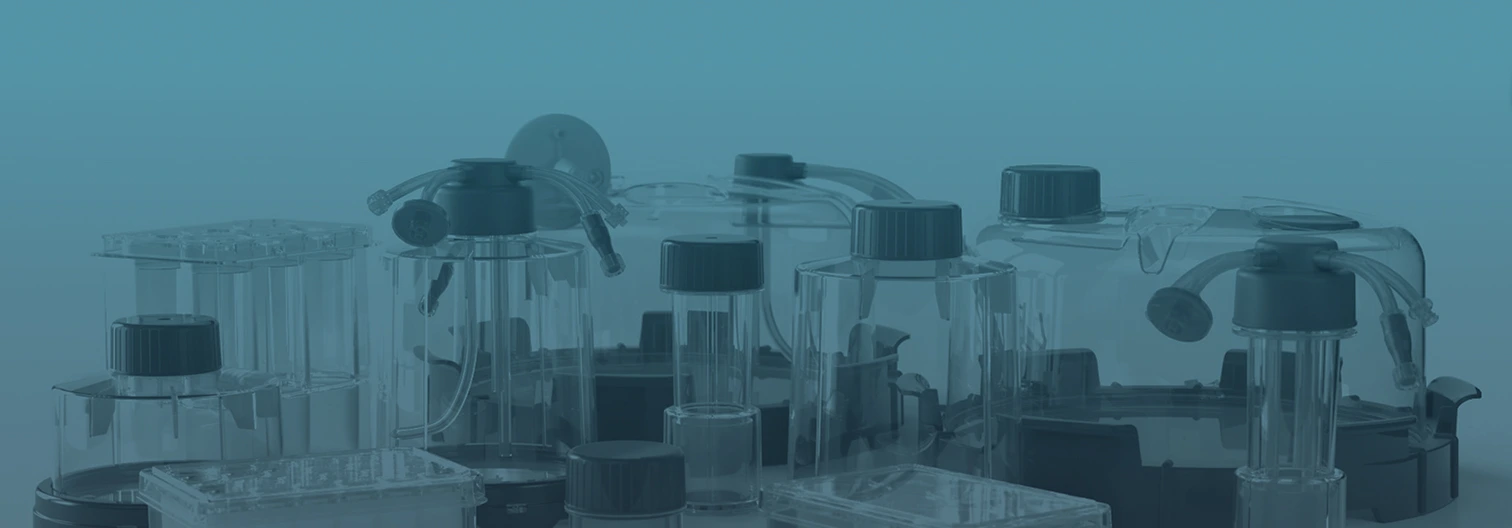
Isolated CD3+ T cells were seeded at 1-2 × 10^6 cells per cm² in G-Rex® 24-well plates (Wilson-Wolf) with VIPR particles at 20 T cells per particle and cultured for 7 days in medium with 6000 IU/ml IL-2, IL-7, IL-15 and N-acetylcysteine. In some experiments the G-Rex® medium was left unchanged for the full 7 days to promote expansion. Cultures seeded with 1 × 10^6 T cells reached on average 2.6 to 4.5 × 10^7 cells at day 7.
Explore related
Full citation
Sivapalan R, Liu J, Chakraborty K, et al. Virus Induced Lymphocytes (VIL) as a novel viral antigen-specific T cell therapy for COVID-19 and potential future pandemics. Sci Rep. 2021;11(1):15295.
Building a similar workflow?
Talk to a ScaleReady specialist about how the G-Rex® platform can support your program — from process development to clinical-scale manufacturing.