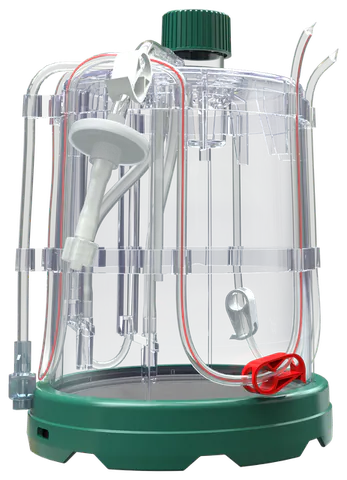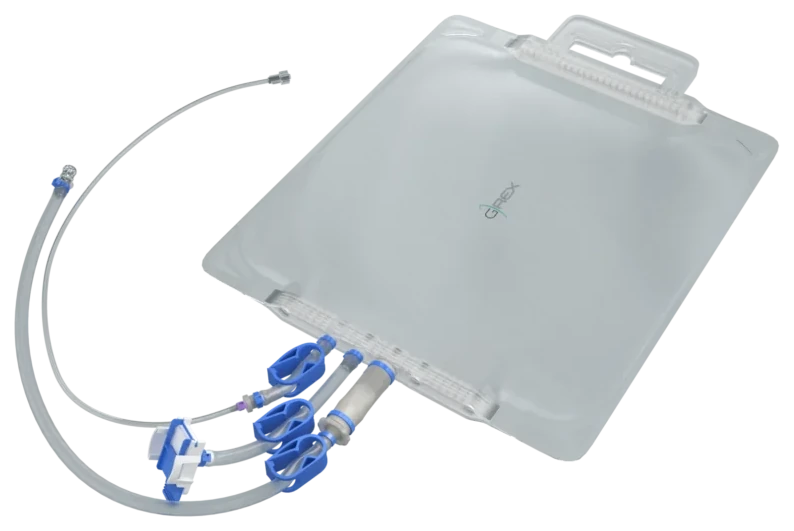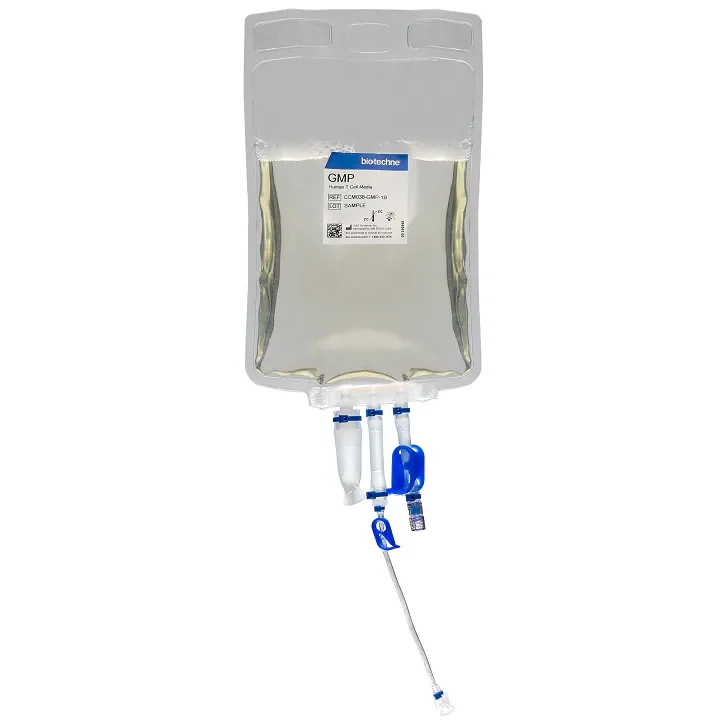
G-Rex® for Tumor Infiltrating Lymphocyte Therapy

The simplest way to assemble quality TIL therapies.

Build your TIL manufacturing process around a linearly scalable platform with "TIL friendly" devices designed specifically to make all parts of the manufacturing simpler, from TIL extravasation (pre-REP) to rapid expansion (REP), through concentration and harvest of the drug substance.

The Value of Simplicity

In TIL therapy, simplicity is the ultimate sophistication.

Before G-Rex®

Before G-Rex®, TIL manufacturing required many culture devices, many manual touchpoints, and repeated open-system manipulations - each adding labor, complexity, and another opportunity for contamination.

Much Simpler

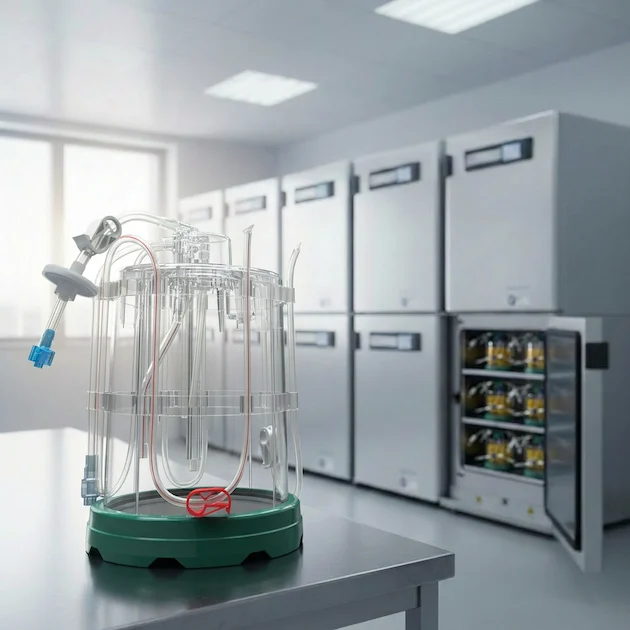
Early pioneers of TIL therapy recognized that G-Rex® could make the process much simpler by allowing treatment-scale TIL expansion with fewer vessels, less media, less incubator space, and less hands-on manipulation. What began as a simpler way to manufacture TIL has become a foundation for how the field continues to scale and evolve.

Vast Majority

ScaleReady estimates that 90% of TIL clinical trials use the G-Rex® technology in the manufacturing.

The Gold Standard

The gold standard for TIL therapy.

From pioneers of TIL therapy at the NCI Surgery Branch and MD Anderson Cancer Center to investigators and developers at Moffitt Cancer Center, Duke University, and more, leaders in the field recognized the utility of G-Rex® in simplifying a highly complicated workflow. Their adoption was the foundation upon which G-Rex® rose to prominence as the preferred platform for adoptive cell therapy developers.
G-Rex

Academics

NIH/NCI Surgery Branch

M.D. Anderson Cancer Center

Moffitt Cancer Center

Duke University

Emory University

University of Minnesota

Pre-BLA

Iovance Biotherapeutics

Explore the Evidence →

A Typical TIL Process

01 Tumor Resection 02 Pre-REP 03 Enrichment 04 Rapid Expansion (REP) 05 Concentration & Harvest 06 Formulation & Fill/Finish

Recommended Products

TIL-friendly G-Rex® devices for every scale.

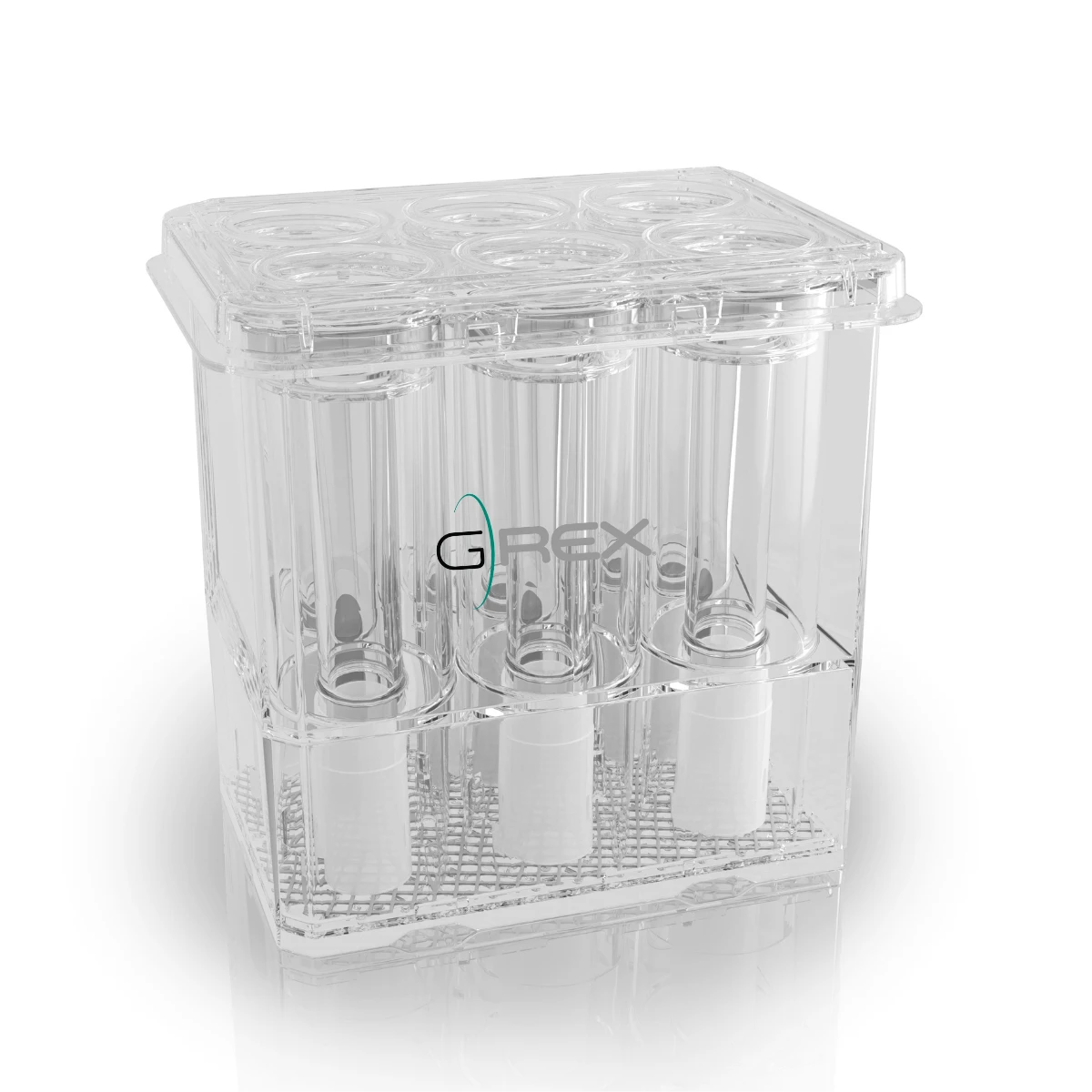
A new line of "TIL Friendly" G-Rex® devices (denoted with the -TF part number) further simplifies the process of making TIL therapy, specifically the process of extravasating TIL from tumor fragments. This new line of products enables a hybrid approach - open processing in the operating room and closed processing thereafter - for maximum efficiency and flexibility. Explore the complete TIL-friendly G-Rex® device family and select the model that fits your process.
Next Steps

Whatever phase your TIL program is in, a G-Rex® Optimization Specialist can help.

Whether you are building a new TIL process, transitioning an existing process to G-Rex®, or optimizing a mature manufacturing workflow, our team can help identify the most practical path forward.

Frequently Asked Questions

Frequently asked questions about G-Rex® for TIL therapy.

Do TIL grown in G-Rex® preserve their clonal diversity?

Yes. In a direct comparison of TIL rapid expansion in G-Rex® versus a traditional flask-and-bag process, Forget et al. reported that no individual T-cell receptor V-alpha or V-beta expression was lost and that rapid expansion did not significantly alter overall T-cell receptor diversity. G-Rex® also supported improved expansion of some poorly growing TIL lines without evidence of clonal selection. [Forget et al., 2016]

What starting material can be put into a G-Rex® to extravasate TIL?

Tumor fragments can be placed directly into G-Rex® for TIL extravasation and initial outgrowth. Published G-Rex® workflows have also used mechanically or enzymatically dissociated tumor digests or single-cell suspensions as starting material. The appropriate starting material depends on how the upstream tumor-processing step is designed. [Shah et al., 2022]

What tumor types have TIL been grown from using G-Rex®?

Published G-Rex® TIL workflows span a broad range of solid tumors, including melanoma, non-small cell lung cancer, cervical carcinoma, head and neck squamous cell carcinoma, soft tissue sarcoma, colorectal and rectal cancers, pancreatic cancer, esophageal cancer, mesothelioma, and uterine leiomyosarcoma, among others.

Does the use of G-Rex® affect TIL phenotype or function?

Published studies do not suggest that G-Rex® compromises TIL phenotype or function. Across different processes, investigators have reported preserved viability and clonal diversity, while Forget et al. also reported favorable mitochondrial and respiratory characteristics in G-Rex®-expanded TIL. Click here to watch her G-Rex® Grant Tour presentation. These outcomes remain process-dependent, so G-Rex® should not be interpreted as universally improving every biological attribute of a TIL drug product.

Can G-Rex® be used for both pre-REP and REP?

Yes. Jin et al. demonstrated G-Rex® for both initial TIL culture and rapid expansion, and later groups have continued to use G-Rex® across both pre-REP and REP as TIL manufacturing has evolved.

Can G-Rex® support closed-system TIL manufacturing?

Yes. G-Rex® is available in closed-system configurations, and published GMP TIL processes have incorporated G-Rex® into functionally closed or closed-system manufacturing approaches. Closure can reduce open handling while preserving the simplicity and scalability of the G-Rex® culture platform.

Can G-Rex® support next-generation or engineered TIL processes?

Yes. G-Rex® continues to appear in next-generation TIL manufacturing, including TIL 3.0 approaches using combined CD3, 4-1BB, and IL-2 stimulation and clinical-scale CRISPR/Cas9 CISH-knockout TIL expansion. These examples demonstrate how the G-Rex® platform can evolve alongside changes in TIL activation, selection, engineering, and expansion. [Johnson et al., 2025; Noldner et al., 2025]

Have a different question? Connect with a G-Rex® Optimization Specialist.

Evidence & References

Explore the scientific publications, conference posters, and ScaleReady resources supporting the G-Rex® for TIL manufacturing story.

  1. Jin J, Sabatino M, Somerville R, Wilson JR, Dudley ME, Stroncek DF, Rosenberg SA. Simplified Method of the Growth of Human Tumor Infiltrating Lymphocytes in Gas-permeable Flasks to Numbers Needed for Patient Treatment. J Immunother. 2012;35:283-292.
  2. Forget MA, Haymaker C, Dennison JB, et al. The beneficial effects of a gas-permeable flask for expansion of Tumor-Infiltrating lymphocytes as reflected in their mitochondrial function and respiration capacity. OncoImmunology. 2016;5:e1057386. doi:10.1080/2162402X.2015.1057386.
  3. Hopewell EL, Cox C, Pilon-Thomas S, Kelley LL. Tumor-infiltrating lymphocytes: Streamlining a complex manufacturing process. Cytotherapy. 2018. doi:10.1016/j.jcyt.2018.11.004.
  4. Wardell S, Lienlaf-Moreno M, Blaskovich M, et al. Iovance Gen 2 TIL Manufacturing Process Produces Drug Products that Exhibit Favorable Quality Attributes for Adoptive Cell Transfer Across 5 Solid Tumor Indications. SITC Annual Meeting poster. 2019.
  5. Sarnaik A, Khushalani NI, Chesney JA, et al. Lifileucel, a Potential Therapy for Metastatic Melanoma Patients who are Primary Refractory to Prior Anti-PD-1 Therapy. SMR Annual Meeting poster. 2019.
  6. Gannon PO, Harari A, Auger A, et al. Development of an optimized closed and semi-automatic protocol for Good Manufacturing Practice manufacturing of tumor-infiltrating lymphocytes in a hospital environment. Cytotherapy. 2020. doi:10.1016/j.jcyt.2020.07.011.
  7. Shah P, Forget MA, Frank ML, et al. Combined IL-2, agonistic CD3 and 4-1BB stimulation preserve clonotype hierarchy in propagated non-small cell lung cancer tumor-infiltrating lymphocytes. J Immunother Cancer. 2022;10:e003082. doi:10.1136/jitc-2021-003082.
  8. Chatani PD, Lowery FJ, Parikh NB, et al. Cell surface marker-based capture of neoantigen-reactive CD8+ T-cell receptors from metastatic tumor digests. J Immunother Cancer. 2023;11:e006264. doi:10.1136/jitc-2022-006264.
  9. Levin N, Kim SP, Marquardt CA, et al. Neoantigen-specific stimulation of tumor-infiltrating lymphocytes enables effective TCR isolation and expansion while preserving stem-like memory phenotypes. J Immunother Cancer. 2024;12:e008645. doi:10.1136/jitc-2023-008645.
  10. Johnson MJ, Sumstad D, Folsom TD, et al. Clinical manufacture of CRISPR/Cas9-based cytokine-induced SH2 protein knock-out tumor-infiltrating lymphocytes for gastrointestinal cancers. Cytotherapy. 2025;27:1229-1239. doi:10.1016/j.jcyt.2025.06.007.
  11. Noldner PK, Zhou Y, Lyniv L, Conejo-Garcia JR, Antonia S, Shaz BH. Improving lung cancer tumor-infiltrating lymphocyte (TIL) manufacturing. Cytotherapy. 2025;27:1240-1250. doi:10.1016/j.jcyt.2025.07.001.
  12. ScaleReady. G-Rex® Grant Program. https://www.scaleready.com/initiatives/g-rex-grant-program/
  13. ScaleReady. G-Rex® Grant Tour 2026 - Houston. https://www.scaleready.com/initiatives/g-rex-grant-tour-2026/g-rex-grant-tour-houston/