
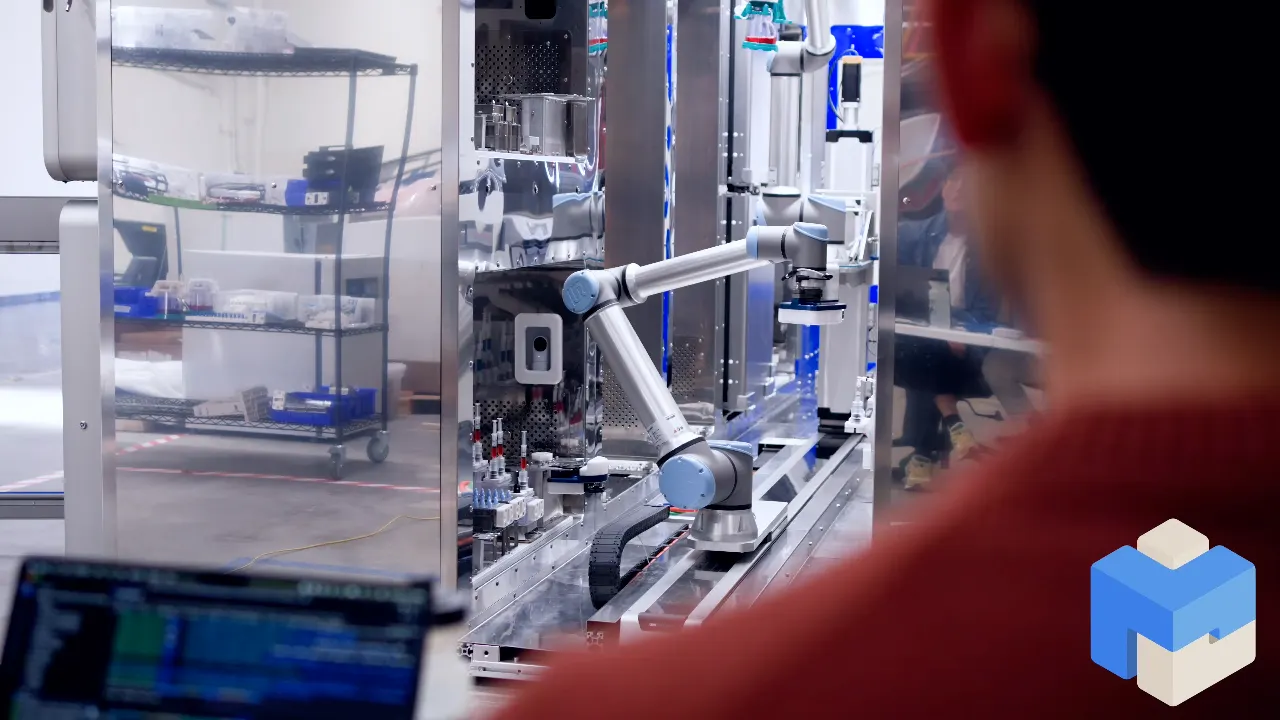
Robotic cell therapy manufacturing
The earliest known industrial robot, conforming to the ISO definition, was completed in 1938. The first robotics patent was filed in 1954 (and granted in 1961). The “Stanford arm” was invented in 1969 and the designs were sold to General Motors. By 1984, industrial robotic systems were standard in automobile manufacturing.
Today, industrial robotic systems are performing typical applications such as welding, assembly, disassembly, pick and place, packaging and labeling, palletizing, production inspection, and testing. Notably, all of these tasks are also required in cell and gene therapy drug product manufacturing.
The rich history of robotic systems being applied to assembly line manufacturing is a tailwind for rapid industrialization of cell and gene therapy – and G-Rex® is a robot’s best friend.
As you can see from the video on the right, robotic handling of G-Rex® devices has always been part of our vision for the future of T cell therapy manufacturing. While the nature of the robot and some minor details of the process are different, the prescience of this vision has now become reality through our many partners driving the robotic autonomation of G-Rex® devices.
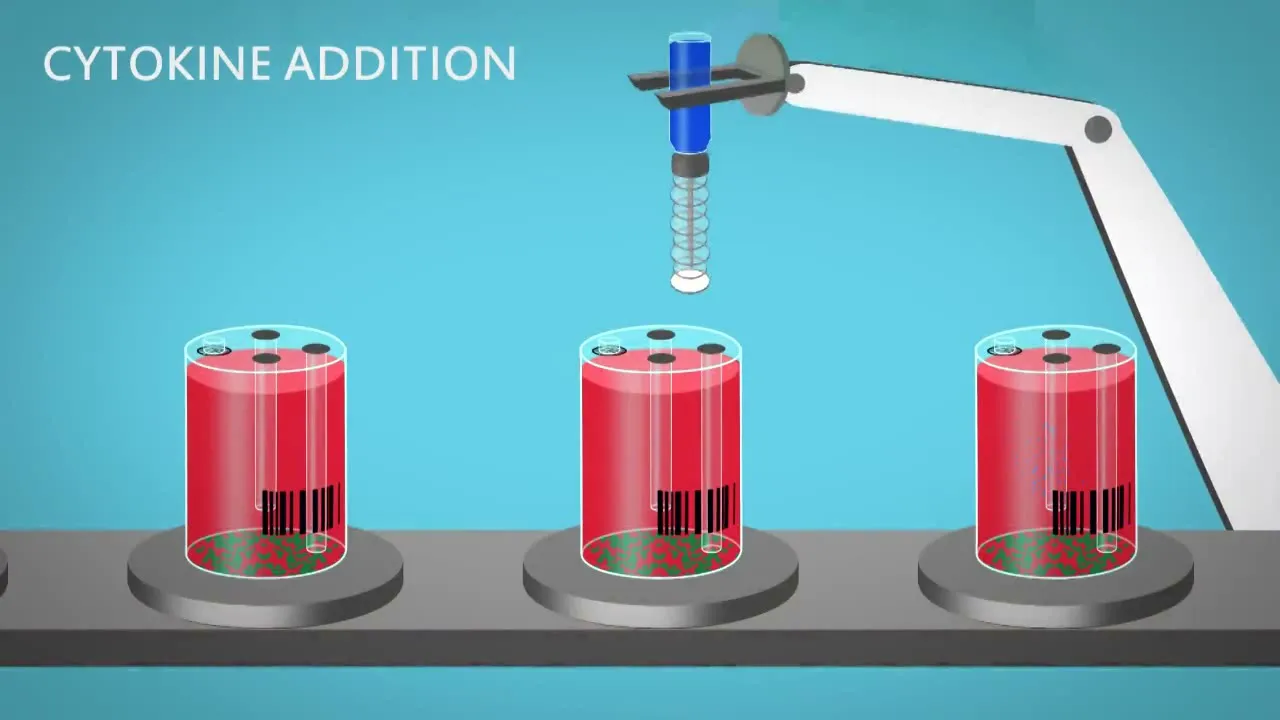
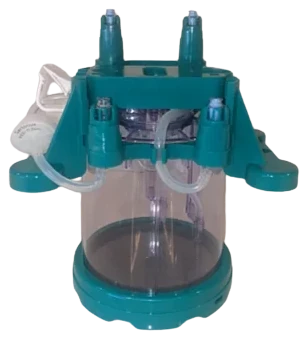
The simplicity of G-Rex® enables rapid iteration of new models into sophisticated liquid handling solutions that streamline the flow of the drug substance through the robotically autonomated assembly line.
The device on the left shows a G-Rex® with “end of arm tooling” that enables the robotic arm to pick up, handle, and maneuver the G-Rex® device – including inoculating cells, media, reagents through sterile welding and connections.
All the internal tubing lines are fixed, as well as fixed sterile connections for stable access. The device functions in the same core way manner as any other device in the G-Rex® platform, enabling continuity and therefore clarity & understanding, standards & comparability, control and continuous improvement.
Robotic cell therapy manufacturing

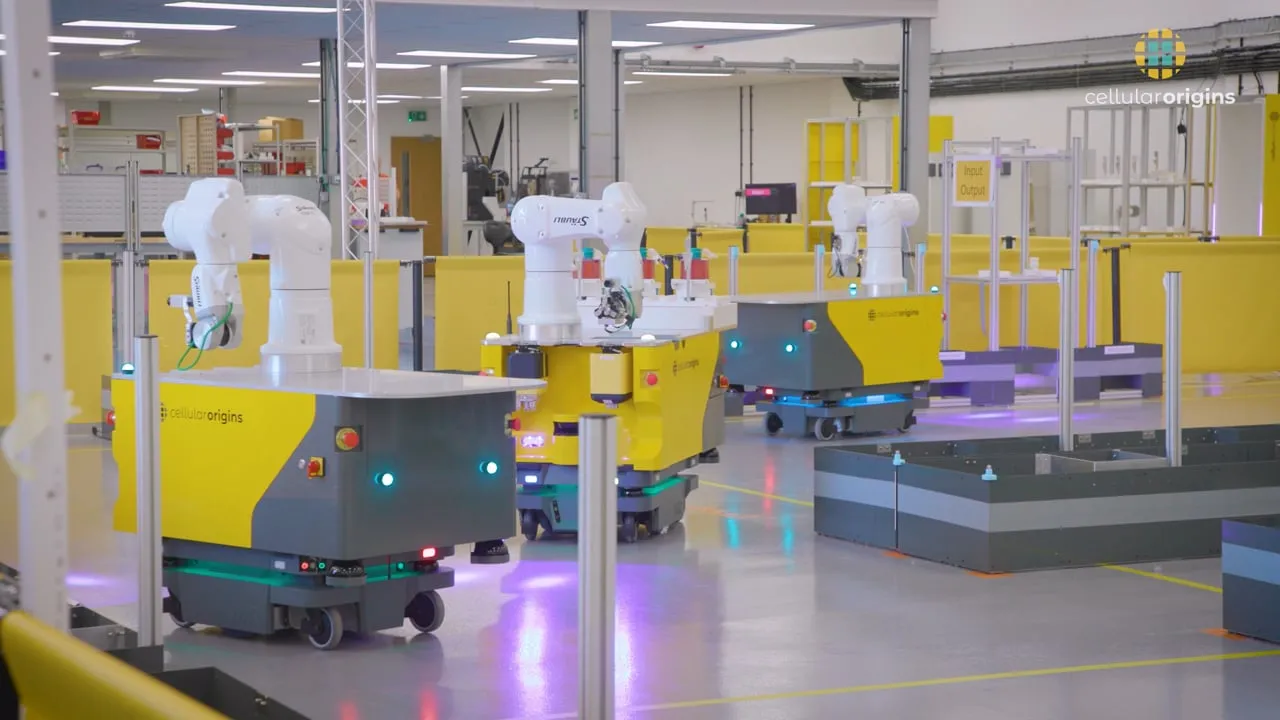
IMR video (Sept 2025)

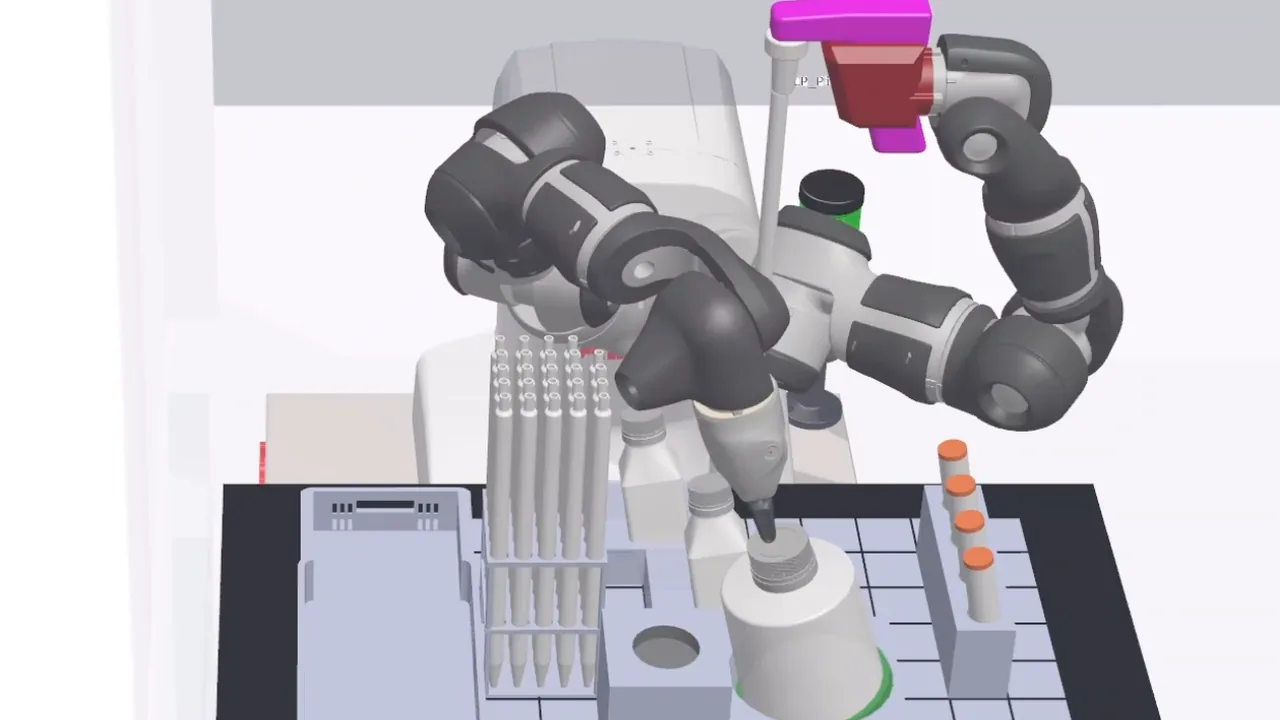
ABB Robotics for Healthcare — Robotic Automation of T-Cell Generation for the treatment of AML
Ready to talk?
Let’s talk more about how ScaleReady can advance your cell and gene therapy research and manufacturing with ingenious efficiency.
ScaleReady is a joint venture between Wilson Wolf Manufacturing and Bio-Techne.