Share:

LEAN Cell & Gene™ is an initiative to promote awareness, education, and adoption of LEAN manufacturing principles and methodologies in the Cell & Gene Therapy industry.
LEAN manufacturing is a production methodology developed by W. Edward Demings over a multi-decade period that focuses on driving maximum quality and efficiency through the systematic identification and elimination of waste. In post-World War II Japan, Demings worked closely with the leadership at the Toyota Motor Company to implement these principles, culminating in the invention of the Toyota Production System (TPS). TPS, referred to by many names including The Toyota Way, kaizan, LEAN (Six Sigma), etc. is deployed in virtually every industrial sector – except Cell & Gene Therapy (for now).
These various forms of waste are absolutely present in Cell & Gene Therapy and are eroding the cash runways of many biotechs who do not have the prospect of revenue for years to come. Surviving this:
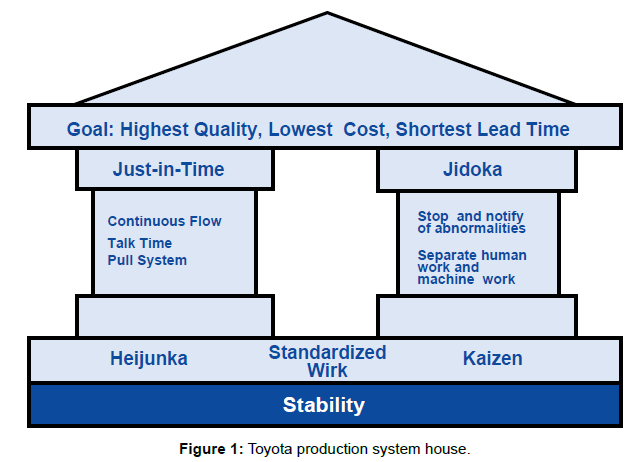
LEAN is often described as the structured application of common sense. That structure is commonly visualized as the Toyota Production System “House.”
The house illustrates how LEAN principles work together as a system—not as isolated tools. A foundation of stability supports standardized work and continuous improvement (kaizen). Two pillars—Just-in-Time and Jidoka (built-in quality)—work in balance to enable flow, pull, and quality at the source. When these elements are aligned, the result is the ultimate LEAN objective: the highest quality, at the lowest cost, in the shortest lead time.
In Cell & Gene Therapy, this framework provides a practical lens for evaluating manufacturing decisions and understanding how individual choices either strengthen—or undermine—the system as a whole.
Below are a list of LEAN concepts and a brief introduction to their context within Cell & Gene Therapy.
In Cell & Gene Therapy, value is often discussed in terms of clinical efficacy, but manufacturing value is created—or destroyed—long before a therapy reaches a patient. A process that is scientifically successful but operationally fragile undermines access, scalability, and long-term viability. Excessive complexity, inflexible equipment, and processes optimized around capital utilization rather than patient need all erode value.
LEAN defines value strictly from the perspective of the customer. In CGT, that includes patients, clinical teams, developers, and ultimately health systems that must absorb the cost of therapy. Manufacturing steps that do not clearly contribute to safety, efficacy, or reliable delivery are candidates for elimination or redesign.
Mechanized bioreactors often add value locally—by reducing manual touchpoints—but can subtract value system-wide by increasing cost, limiting throughput, and locking developers into rigid workflows early in development. LEAN encourages evaluating value at the system level, asking whether a manufacturing choice increases access and sustainability over the full lifecycle of the therapy.
True value in CGT manufacturing is achieved when processes remain adaptable, scalable, and aligned with patient-driven demand.
G-Rex supports value creation by minimizing unnecessary complexity while preserving biological performance. Its simple, scalable design enables efficient expansion without imposing downstream constraints or early process lock-in. By lowering capital burden and supporting consistent workflows from development through commercial scale, G-Rex helps ensure that manufacturing decisions add value across the entire lifecycle of a CGT program.
Highly mechanized bioreactors often encourage batching to maximize utilization, pushing work earlier than necessary and increasing work-in-process inventory. Cells may be expanded or processed simply because a system is available, not because downstream steps or patient readiness demand it.
LEAN emphasizes aligning production with real demand signals. In CGT, this means designing processes that can start, pause, and resume without penalty, and that do not require artificial batching to remain economical. JIT reduces waiting, handling, and risk—while improving responsiveness to patient and clinical needs.
G-Rex enables Just-in-Time behavior by allowing expansion to begin only when patient material and downstream readiness are aligned. Because capacity scales linearly and does not depend on filling or reserving large mechanized systems, teams can initiate cultures in direct response to demand—supporting true JIT manufacturing rather than equipment-driven push behavior.
Flow describes the smooth, uninterrupted movement of product through the value stream. In Cell & Gene Therapy, flow is rarely continuous. Cells often spend more time waiting than being transformed—waiting for equipment, cleanroom availability, operators, or downstream readiness. Each pause increases risk, extends vein-to-vein time, and adds cost without improving the therapy.
Highly mechanized, all-in-one bioreactors are frequently optimized for local efficiency rather than system flow. By tightly coupling activation, transduction, expansion, and harvest into a single piece of equipment, they create a dominant constraint. When that constraint is occupied, the entire value stream waits. When something goes wrong, flow stops everywhere.
LEAN reframes the question from “How efficiently is this machine running?” to “How smoothly is the product moving?” In CGT, improving flow often means decoupling long biological steps from short mechanical ones, reducing handoffs, and enabling parallel work. Processes that allow expansion to proceed independently of downstream operations tend to shorten overall cycle time and increase effective capacity—without adding headcount or cleanrooms.
Flow is not about speed. It is about removing waiting, which is one of the most damaging and least visible forms of waste in CGT manufacturing.
G-Rex supports flow by decoupling the longest step in CGT manufacturing—cell expansion—from downstream processing constraints. Because expansion occurs in a simple, scalable vessel rather than a fully integrated system, cells are not forced to wait on harvest, formulation, or equipment availability. Multiple cultures can run in parallel without competing for a single mechanized resource, allowing product to move through the value stream with fewer stops, fewer queues, and shorter overall cycle times.
Takt, or pace, defines the rate at which work must be completed to meet demand. In CGT, the challenge is not maximizing speed, but establishing a repeatable, sustainable rhythm that aligns with patient inflow and staffing capacity. Irregular pacing leads to periods of overload followed by idle time—both of which increase risk.
Mechanized bioreactors often impose fixed cycle times and rigid scheduling windows. When patient demand fluctuates, teams are forced either to rush work or leave expensive equipment underutilized. This disconnect between biological reality and equipment cadence destabilizes operations.
LEAN encourages designing processes that can flex around demand while maintaining consistency. Establishing pace in CGT allows teams to plan staffing, manage cleanroom usage, and reduce reliance on heroic efforts. Stable pace is a prerequisite for predictable quality and cost.
Pull means work is triggered by real demand rather than forecasts, schedules, or equipment availability. CGT manufacturing is inherently pull-based: each batch exists because a patient exists.
Despite this, many CGT processes are designed around push logic—filling equipment, maximizing batch size, or running steps simply because a system is available. This misalignment creates queues, excess work-in-process, and fragile schedules.
LEAN Cell & Gene emphasizes designing processes that respond directly to patient and clinical demand. Upstream steps only occur when downstream capacity is ready, and resources are sized to support steady, repeatable throughput rather than peak utilization.
Pull exposes hidden constraints, simplifies planning, and aligns manufacturing operations with the realities of autologous and personalized therapies.
G-Rex enables pull by decoupling expansion from downstream processing and equipment availability. Expansion can be initiated and progressed based on actual downstream readiness rather than system reservation, allowing patient demand—not equipment utilization—to dictate when work occurs.
Jidoka means embedding quality directly into the process so abnormalities are detected immediately and defects are not passed downstream. In CGT, failures are expensive, irreversible, and often patient-specific—making early detection critical.
Highly integrated systems can obscure intermediate process states, delaying visibility into issues until the end of a long run. When multiple steps occur inside a closed system, opportunities for intervention are limited, and quality becomes something that is tested in rather than built in.
LEAN emphasizes transparency, feedback, and timely human judgment. In CGT, built-in quality requires processes that allow frequent assessment, clear signals of abnormality, and the ability to intervene without jeopardizing the entire batch. Jidoka shifts quality from a downstream gate to a continuous discipline.
G-Rex supports built-in quality by keeping expansion visible, accessible, and separable from downstream steps. Operators can monitor cultures, identify deviations early, and take corrective action without disrupting unrelated operations—supporting quality at the source rather than relying on end-stage detection.
Andon is the mechanism that enables Jidoka by signaling problems and empowering teams to respond. In CGT, effective Andon requires clear indicators, defined responses, and the ability to pause or adjust work without cascading consequences.
In tightly coupled systems, stopping a process often halts multiple operations at once, discouraging early intervention. This creates a perverse incentive to “push through” issues rather than surface them.
LEAN Andon systems make problems visible and safe to address. In CGT, this means structuring processes so that responding to an abnormality is the expected behavior—not a disruptive event. Effective Andon protects both product and people.
Because G-Rex cultures are independent and not locked into a single integrated system, issues can be flagged and addressed locally. Teams can pause, investigate, or adjust without shutting down unrelated work—making early signaling and response practical rather than punitive.
Kaizen is continuous, incremental improvement driven by the people doing the work. CGT manufacturing is still evolving, and processes must adapt as knowledge, demand, and regulatory expectations change.
Highly specialized or rigid systems can make improvement slow and expensive, requiring significant revalidation or redesign to implement even small changes. This discourages experimentation and learning.
LEAN encourages frequent, low-risk improvements that compound over time. In CGT, Kaizen allows teams to refine protocols, reduce waste, and improve robustness without disrupting the entire system. Sustainable progress depends on processes that invite learning rather than resist it.
G-Rex’s simplicity and familiarity lower the barrier to experimentation and improvement. Incremental changes to protocols, scale, or scheduling can be implemented without re-engineering the entire system, enabling continuous improvement across development, clinical, and commercial stages.
Heijunka smooths workload to reduce instability caused by uneven demand. In CGT, perfect leveling is impossible due to patient variability, but poor design amplifies that variability into operational chaos.
Batch-driven systems and large step-changes in capacity create cycles of overload and underutilization, stressing teams and quality systems. LEAN leveling focuses on absorbing variability through flexible capacity and steady workflows.
In CGT, Heijunka is about designing systems that can handle uneven demand without swinging between crisis and idle states. Leveling stabilizes people, processes, and outcomes.
G-Rex supports leveling through linear scale-out and distributed capacity. Workload can be adjusted gradually rather than in large increments, helping organizations absorb patient variability while maintaining predictable operations and stable quality.
Waste (muda in Japanese, 無駄) is the silent killer of many cell & gene therapy entities and can be defined broadly as any activity that is non-value adding in nature. Luckily, titans of industry have long ago identified common forms of waste endemic to any manufacturing operation. These various forms of waste are absolutely present in Cell & Gene Therapy and are eroding the cash runways of many biotechs who do not have the prospect of revenue for years to come, destabilizing operations, inhibiting scalability, and diminishing the prospects of universal patient access.
Waste from a product or service failure to meet customer expectationsk.

Waste from making more product than customers demand.

Waste from time spent waiting for the next process step to occur.

Wastes due to underutilization of people’s talents, skills, and knowledge.

Wasted time, resources, and costs when unnecessarily moving products and materials.

Wastes resulting from excess products and materials that aren’t processed.

Wasted time and effort related to unnecessary movements by people.

Wastes related to more work or higher quality than is required.
Lean in cell and gene therapy is not about doing more—it’s about removing what doesn’t move therapy to the patient. Born from Toyota’s focus on flow and waste reduction, Lean helps manufacturing teams build stability, standard work, and built-in quality so processes run predictably. In a field where time and reliability define patient access, Lean becomes a foundation—not a nice-to-have.
Cell therapy manufacturing isn’t overcomplicated because of biology—it’s overcomplicated because organizations add platforms, automation, and interfaces before stability. Complexity erodes predictability, throughput, and quality. Lean means intentional simplicity: clear standards, ownership, throughput focus, and technology introduced only after stability.
Learn how to cut defects, overproduction, waiting and other wastes to streamline your cell & gene processes.